
Virat Kohli’s Praise Highlights Growing Recognition for Indian Hockey’s Elite Fitness Standards
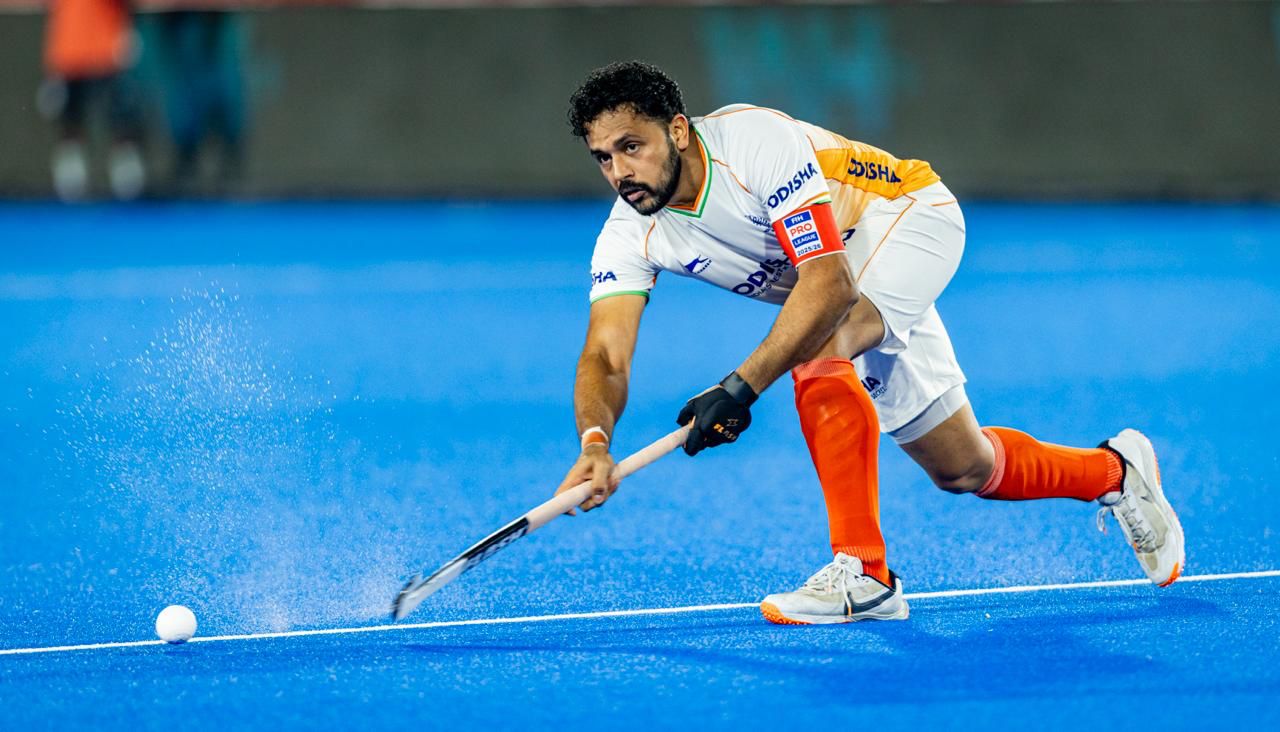
Virat Kohli’s admiration for the fitness standards of Indian hockey players has struck a powerful chord within the hockey community, with several senior stars describing his remarks as a major recognition of the sport’s physical demands and relentless training culture.
Speaking during the third edition of the RCB Innovation Lab Indian Sports Summit, Kohli made a candid comparison between cricket and hockey while discussing athletic conditioning and professional fitness standards.
“I know people sometimes look at fitness as something extraordinary, but for me it’s simply what the job demands. It should be the norm, not something celebrated as special,” Kohli said.
He then turned attention towards hockey, admitting that the physical intensity of the sport often goes underappreciated in India.
“If I’m being brutally honest, we are not even 15% of the fitness of an Indian hockey player. If the hockey players watch our training sessions, they’d probably laugh because their sport demands far more physically,” Kohli added.
The statement immediately resonated across the Indian hockey setup, particularly because it came from one of the country’s most influential sporting figures — an athlete widely credited for transforming fitness culture within Indian cricket.
Harmanpreet Singh reveals conversation with Kohli
Indian men’s hockey captain Harmanpreet Singh revealed that he had recently spoken to Kohli about fitness benchmarks and training standards in hockey.
According to Harmanpreet, Kohli was genuinely surprised when he learned about the physical parameters maintained by Indian hockey players, including goalkeepers. “We had a great conversation around fitness not too long ago at an event. He told me hockey is such a fast sport and was curious to know about our fitness benchmarks,” Harmanpreet said.
The drag-flick specialist explained how hockey’s modern demands require every player to maintain exceptional endurance and recovery levels. “We spoke about the yo-yo test and when I told him that even our goalkeepers score above 20, he was genuinely surprised,” he added.
Harmanpreet also stressed that recognition from an athlete of Kohli’s stature helps bring more visibility to the realities of elite hockey.
“I am grateful that someone like Virat Kohli brought attention to the fitness standards of hockey players because ours is one of the fastest and most physically demanding sports in the world,” he said.
Modern hockey built on speed and endurance
Veteran midfielder Manpreet Singh echoed similar sentiments, describing fitness as the foundation of modern hockey. Over the last decade, international hockey has evolved into an extremely high-speed sport built around constant pressing, transitions, counter-attacks and rapid positional movement. The ability to sustain intensity over four quarters has become crucial at the elite level.
“Hockey today is incredibly fast. The ball travels from one end to the other within seconds and players are constantly moving, pressing and transitioning,” Manpreet explained. The Tokyo Olympic bronze medallist also acknowledged Kohli’s own influence on Indian sport.
“Virat Kohli is among the fittest athletes in the world and he transformed the fitness culture within Indian cricket. His discipline, commitment and lifestyle inspire millions,” Manpreet said. For hockey players, Kohli’s praise carries additional significance because cricket continues to dominate India’s sporting attention and commercial ecosystem. Public recognition from a cricket icon therefore helps shine a spotlight on the physical demands faced by athletes in other sports.
Hardik Singh highlights brutal tournament schedules
Star midfielder Hardik Singh pointed towards the packed schedules hockey players regularly endure at the international level. Unlike cricket squads that often rotate across formats and series, hockey tournaments frequently require players to compete every alternate day over long stretches with limited squad depth.
“It also sends a message that the fitness of hockey players should never be underestimated,” Hardik said while reacting to Kohli’s comments. “We play back-to-back matches in tournaments like the Pro League and at the Olympics, where we can play seven matches in eleven days with a limited squad. That requires supreme fitness and recovery,” he added.
The increasing emphasis on recovery science, endurance conditioning and workload management has become a defining feature of the Indian men’s hockey setup in recent years, especially following the team’s Olympic bronze medal success in Tokyo.
Interestingly, Kohli is not the first high-profile sports figure to praise the physical standards inside the Indian hockey team. During the Hero Asia Cup Rajgir Bihar 2025, renowned South African mental conditioning expert Paddy Upton had spoken glowingly about the professionalism and conditioning levels within the squad. Upton, who previously worked with the Indian cricket team during their 2011 ODI World Cup triumph, reportedly remarked that while Kohli’s standards were exceptional in cricket, the Indian hockey environment contained “18 or 20 Virat Kohlis” in terms of physical commitment and intensity.
That comparison underlined just how demanding modern hockey has become.
Indian hockey has witnessed a resurgence over the last few years, with consistent podium finishes, Olympic success and improved performances across major international tournaments. Alongside tactical improvements, fitness and conditioning have emerged as one of the biggest strengths of the current generation. Kohli’s comments have now amplified that conversation beyond the hockey ecosystem, bringing mainstream attention to the extraordinary physical preparation required in the sport.
For players like Harmanpreet, Manpreet and Hardik, the praise is more than just a compliment. It is validation for years of unseen hard work, discipline and sacrifice that go into competing at the highest level of international hockey.
Comments (0)
to post comments, replies, and votes.
Loading comments…
.jpeg)
.jpg)
.jpg)