
AFC U17 Women’s Asian Cup: India U17 Face Defining Test Against Japan
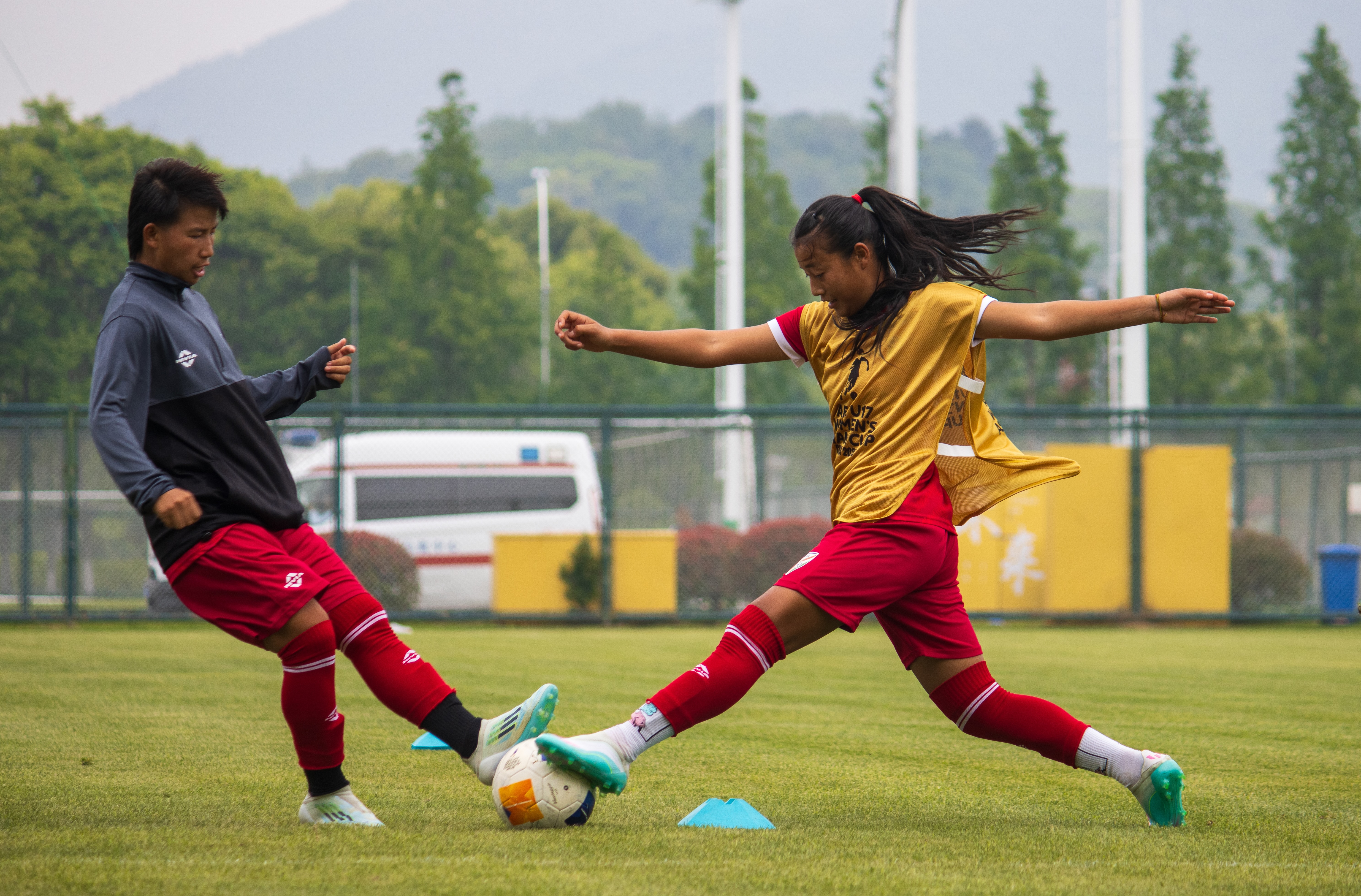
India’s campaign at the AFC U17 Women’s Asian Cup 2026 enters a critical phase as the Young Tigresses prepare to take on tournament heavyweights Japan U17 Women's Team in their second Group B fixture in Suzhou, China.
Following a 0-2 defeat to Australia U17 Women's Team in their opening match, India now find themselves in a situation where both results and goal difference could prove decisive. With several high-scoring games already recorded in the tournament including Japan’s emphatic 13-0 win over Lebanon the margin for error has narrowed significantly.
The scale of the challenge ahead is clear.
Japan are not just favourites for this contest; they are one of the most dominant teams in the history of this competition. In nine editions of the tournament, Japan have reached the final seven times and lifted the title on four occasions. Their pedigree at youth level extends globally as well, having won the FIFA U17 Women’s World Cup in 2014.
For India, this is as much a learning opportunity as it is a competitive test.
Head coach Pamela Conti has been clear about the approach her side will take. While acknowledging Japan’s quality, she has emphasized the importance of playing with intent rather than retreating into a purely defensive mindset. According to Conti, India cannot afford to allow Japan time and space on the ball. The emphasis is on maintaining defensive compactness while also stepping higher up the pitch to disrupt Japan’s rhythm.
That tactical balance will be crucial.
Japan’s style is built around quick passing, fluid movement and positional rotations that can stretch defensive structures. Teams that sit too deep often find themselves overwhelmed by waves of attacks, while those that press without structure risk leaving gaps in behind.
India’s preparation reflects an awareness of these challenges. The team has undergone more than three months of structured training leading into the tournament, including exposure tours to Myanmar and Russia. Those matches provided valuable insights into dealing with physically strong opponents an aspect that also came into play against Australia.
However, Japan present a different kind of test.
If Australia challenged India physically, Japan will test them technically and tactically. Their ability to combine quickly in tight spaces and create one-on-one situations demands constant concentration and disciplined positioning.
Right-back Divyani Linda highlighted this aspect while speaking ahead of the match. She acknowledged the excitement within the squad at facing one of the best teams in the world, while also underlining the need for sharper execution. India’s defensive organisation showed promise against Australia for long periods, but individual errors ultimately proved costly. Eliminating those mistakes will be critical against a side that punishes even the smallest lapses.
Divyani also pointed out the importance of mental composure. Against Japan, the game is likely to be played at a high tempo, with quick transitions and minimal time on the ball. India will need to stay calm under pressure, rely on short passing and avoid conceding possession cheaply.
Beyond tactics, there is also a broader developmental objective at play. For a young Indian squad, competing against a team of Japan’s calibre offers invaluable experience. Matches like these help players understand the demands of elite-level football from decision-making under pressure to maintaining discipline over 90 minutes.
Conti has stressed that the team’s mentality should remain consistent regardless of the opposition.
Whether facing the strongest team or the lowest-ranked side, the objective remains the same to compete for three points. Building that mindset is a key part of developing a competitive culture within the squad. At the same time, the practical reality of the group situation cannot be ignored. With Australia set to face Lebanon in the other Group B fixture, India will be aware that goal difference could become a decisive factor in determining qualification. That adds another layer of pressure to an already challenging contest. For India, the match against Japan represents more than just a group-stage fixture.
It is a measure of how far the team has progressed in terms of tactical discipline, mental resilience and ability to compete against elite opposition. It is also an opportunity to demonstrate growth not just in terms of results, but in performance quality.
The expectations are realistic. Japan enter the match as clear favourites, backed by history, structure and a proven developmental system. But for the Young Tigresses, the focus is on execution minimizing errors, staying compact, and making the most of moments when opportunities arise. Even in defeat, a competitive performance could provide a strong foundation for the future.
Because in tournaments like these, progress is not always measured solely by results, but by how teams respond to the highest level of challenge.
Comments (0)
to post comments, replies, and votes.
Loading comments…
.webp)