
Bipin Singh Ignored Despite 10 Goal Contributions? Khalid Jamil’s Selection Policy Faces Questions
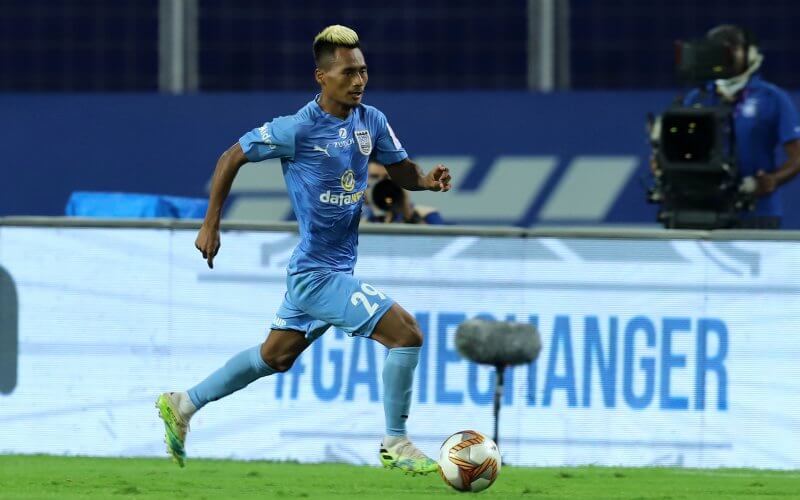
The omission of Bipin Singh from the Indian national football team’s preliminary squad for the Unity Cup 2026 has triggered one of the biggest selection debates in Indian football this season.
The reason is straightforward the numbers strongly supported his case. Bipin finished the 2025-26 campaign with 10 goal contributions in 23 matches across the Indian Super League, Super Cup and Durand Cup. Among Indian attackers, only Liston Colaco had a better overall attacking output this season. Yet, when Khalid Jamil announced his preliminary national team squad, Bipin’s name was missing.
That omission immediately raised a difficult question if selections are truly based on current performance, how did Bipin go unnoticed?

For East Bengal, Bipin was one of the most influential attacking players throughout the season. He finished with six goals and four assists in all competitions, playing a major role in East Bengal’s historic ISL title-winning campaign. More importantly, his contributions consistently arrived in decisive moments.
Even in East Bengal’s title-clinching victory against Inter Kashi, Bipin provided the crucial cross for Mohammed Rashid’s winning goal despite struggling physically after suffering severe dehydration days earlier during the Kolkata Derby against Mohun Bagan Super Giant. Statistically, Bipin compared favourably with several wingers who made the national team shortlist.
While Liston Colaço remained the standout domestic winger, Bipin’s end product was superior to many others in contention. His consistency, experience and ability to deliver in high-pressure games appeared to fit the exact criteria Jamil publicly outlined after taking charge of the national team.
That is what makes the exclusion difficult to ignore.
Since becoming India head coach, Khalid Jamil has repeatedly emphasised that club performances would dictate national team opportunities. The messaging was significant because Indian football has long faced criticism for favouring reputation over current form. Jamil’s appointment was viewed as the beginning of a more merit-based system where strong domestic seasons would finally be rewarded.
On paper, Bipin represented the ideal example of that philosophy. He was productive, experienced, tactically mature and coming off a title-winning season. Yet the national team management opted to look elsewhere.
This contradiction is precisely why the debate has intensified among fans and analysts.
From the coaching staff’s perspective, however, the decision appears less emotional and more tactical. Jamil’s preferred systems rely heavily on defensive discipline from wide players. Against physically superior international opponents, India are expected to spend long phases defending compactly before transitioning quickly in attack.
In that setup, work rate without the ball becomes as important as attacking production. According to internal tactical assessments, Bipin’s defensive awareness and pressing efficiency were viewed as limitations compared to alternatives such as Ashique Kuruniyan or Manvir Singh.
The emergence of younger wingers also influenced the selection dynamics.
Players like PN Noufal have been identified as long-term assets for the national team structure. At 25, Noufal offers higher physical intensity and transition speed, qualities Jamil appears to prioritise for upcoming AFC Asian Cup qualifiers and the SAFF Championship.
Meanwhile, Bipin is now 31.
That age factor matters in long-term planning, particularly for a coaching setup trying to gradually lower the squad’s average age while preparing for future tournament cycles.
Another major factor is the integration of Ryan Williams into the national team setup. The former Australian player immediately strengthened India’s wide attacking options after acquiring Indian citizenship. His debut goal against Hong Kong instantly elevated him into a key attacking role. With Williams, Liston Colaço, Lallianzuala Chhangte, Ashique Kuruniyan and Manvir Singh already competing for wide positions, the squad became heavily crowded. In that context, Bipin’s profile may simply have been viewed as tactically redundant rather than inadequate.
There was also a practical issue surrounding Bipin’s physical condition at the end of the season. After suffering severe dehydration during the Kolkata Derby, he pushed through fatigue to complete East Bengal’s title run. But the turnaround between the ISL final and national team camp was extremely short. The preliminary squad was scheduled to assemble almost immediately before departure for London. Carrying an exhausted player into a physically demanding international tournament against teams like Jamaica and Nigeria represented a significant risk.
From a sports science perspective, the management likely prioritised recovery and injury prevention over short-term inclusion.
Ultimately, Bipin Singh’s omission exposes the complex reality of international football selection. Domestic statistics matter, but they are only one part of a much larger evaluation process involving tactical suitability, physical readiness, age profile and long-term planning. Still, the debate will continue because Bipin’s performances unquestionably deserved recognition.
If national team selections are marketed primarily as performance-based decisions, then leaving out one of the country’s most productive Indian attackers naturally invites scrutiny.
Whether justified tactically or not, Bipin Singh’s exclusion has become an early test of Khalid Jamil’s credibility and consistency as India head coach.
Comments (0)
to post comments, replies, and votes.
Loading comments…
.webp)