
The Tri-Nation Women’s Football International Friendly Tournament 2025 in Shillong brought the Indian women’s football team back to the Northeast after nearly a decade, but the return did not produce the results the Blue Tigresses hoped for.
Featuring India (FIFA Rank 63), Iran (70) and Nepal (89), the tournament was designed as a preparation window ahead of the AFC Women’s Asian Cup Australia 2026, with India aiming to test new combinations, integrate fresh talent, and regain match rhythm after a four-month break. While the defeats against Iran and Nepal were disappointing, the tournament offered valuable clarity: India has significant work to do before taking on stronger Asian sides in 2026.
Hosted at the Jawaharlal Nehru Stadium in Shillong, the competition marked India’s first appearance there since the 2016 South Asian Games. The atmosphere was electric, with the Northeast’s passionate football culture filling the stands and giving the players a spirited backdrop. For many of the younger squad members several of whom were drafted in after strong domestic performances in the Rajmata Jijabai Trophy this was their first chance to play in front of such an enthusiastic crowd.
But on the pitch, the Blue Tigresses struggled to find their rhythm.
India 0–2 Iran: A Difficult Opening Test
India opened their campaign on October 21 against an organized and composed Iran side. Despite a goalless first half, Iran controlled possession and dictated the tempo from the start. India, returning to competitive action after four months, looked rusty and hesitant across the pitch.
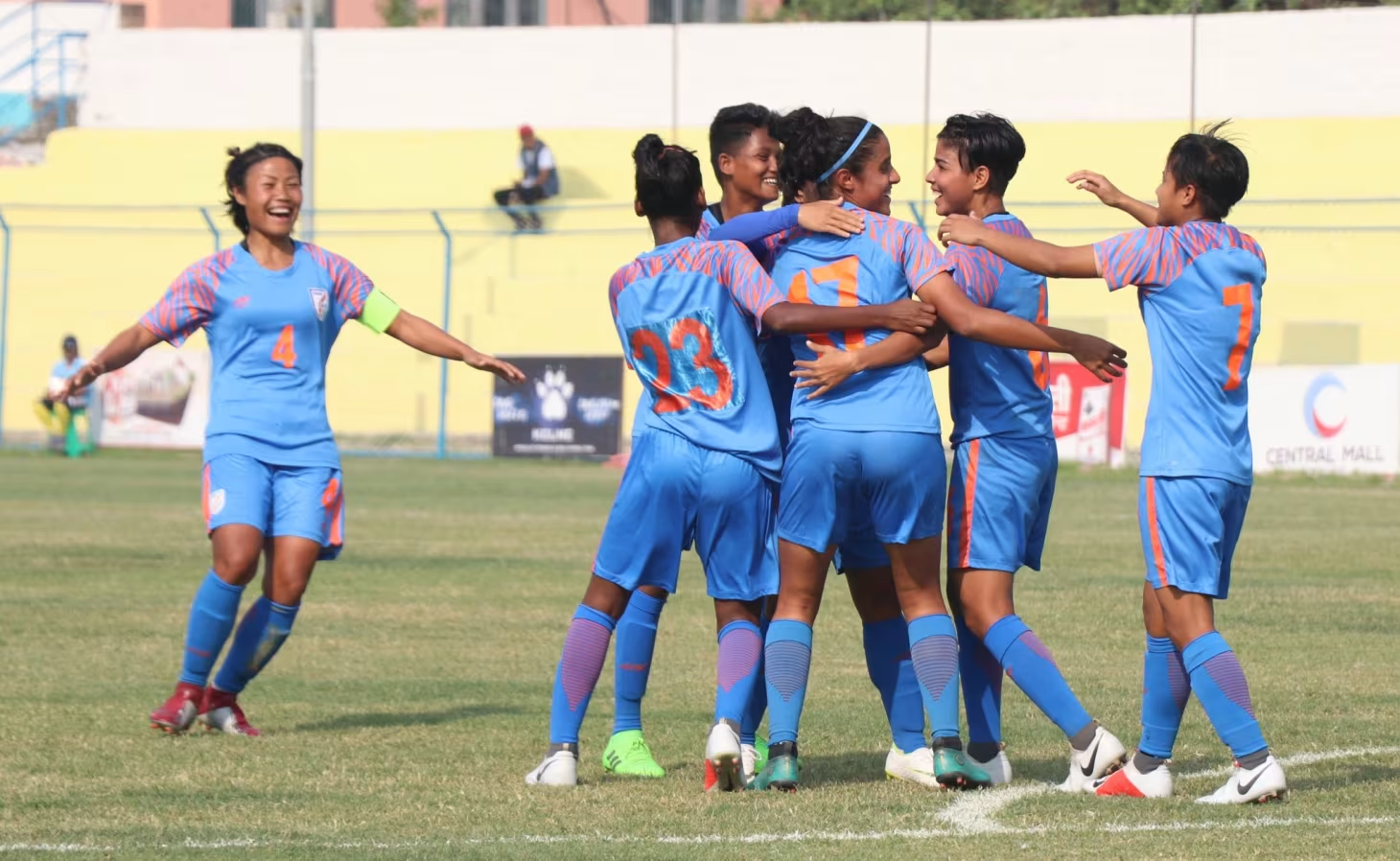
The breakthrough came in the 64th minute, when a cross from the right was headed onto the bar by Zahra Ghanbari. India’s defence failed to clear the danger, allowing substitute Sara Didar to pounce on the rebound and fire Iran ahead. Ten minutes later, a misjudged clearance from Ratanbala Devi gifted Didar her second goal, sealing the match. Iran nearly added a third in stoppage time when Ghohrood sprinted down the left and struck the post yet another moment that exposed India’s vulnerabilities. Meanwhile, India’s attack produced only a single meaningful shot on target, a low free-kick from Lynda Kom Serto in the 89th minute that Iran’s goalkeeper Raha Yazdani comfortably saved.
For most of the match, the Blue Tigresses failed to build attacking sequences or link midfielders with forwards, allowing Iran to defend without major difficulty.
The match exposed clear gaps between the two teams. Iran entered the tournament already qualified for next year’s Asian Cup and displayed the confidence of a team accustomed to high-intensity matches. India, on the other hand, showed fatigue in decision-making, lacked cohesion in transitions, and struggled defensively under pressure.
India 1–2 Nepal: A Missed Opportunity
India’s second match on October 27 against Nepal was an opportunity to regroup and finish the tournament on a high. Instead, the Blue Tigresses found themselves trailing within two minutes. A bouncing ball was not dealt with convincingly by the Indian backline, allowing Nepal’s star striker Sabitra Bhandari to chip the ball over goalkeeper Panthoi Chanu. India reacted better after the early deficit, with Ratanbala Devi testing Nepal’s keeper twice within the first 15 minutes. But once again, the finishing lacked precision, and India failed to convert their chances into goals. The team struggled to maintain midfield control and could not establish sustained spells of possession.
Read Articles Without Ads On Your IndiaSportsHub App. Download Now And Stay Updated
In the 63rd minute, Nepal doubled their lead through a brilliantly taken free-kick from Bhandari, her second of the match. While India tried to push higher up the pitch, defensive lapses persisted in both open play and set-piece scenarios.
India finally pulled one back in the 81st minute, when substitute Karishma Shirvoikar scored her maiden international goal after receiving a long ball from Nirmala Devi. The final 10 minutes saw India pressing aggressively for an equaliser, but Nepal held on with disciplined defending and effective game management.
This match reinforced the need for India to sharpen their defensive structure, improve tactical consistency, and convert chances more reliably.
Iran Wins and Shillong Takes the Spotlight
Iran emerged the strongest side of the tournament, winning both their fixtures including a 1–0 win over Nepal and demonstrating readiness for the AFC Women’s Asian Cup. Their disciplined shape, physical fitness, and tactical clarity stood out and provided India with an important benchmark.
However, the biggest triumph of the tournament was the football atmosphere in Shillong. The city embraced the Blue Tigresses wholeheartedly, with fans turning up in thousands to support the national team. For the players and the federation, this was a reminder of why Northeast India remains the heartbeat of Indian football. The energy in the stands, the chants, and the pride of the locals created a memorable environment that will inspire many young girls in Meghalaya and the region.
Read Articles Without Ads On Your IndiaSportsHub App. Download Now And Stay Updated
Lessons Learned and the Road to the AFC Asian Cup 2026
With the AFC Women’s Asian Cup 2026 on the horizon, India must use the lessons from Shillong constructively.
The defeats highlighted three major areas of concern:
Defensive Concentration: Conceding goals through lapses early concessions, unmarked runners, and poor clearances shows that India needs sharper defensive structure and communication. Against stronger Asian teams, such errors will be punished more severely.
Attacking Sharpness: Across both matches, India struggled to create clear chances and delayed shots in crucial situations. The midfield lacked fluidity, and forwards were often isolated. Sharper decision-making and quicker transitions will be essential against teams like Japan, Vietnam, and Chinese Taipei.
Match Fitness and Rhythm: The four-month absence from competitive matches was visible. Players looked heavy in possession, slow to react, and inconsistent in second-ball situations.
A critical concern now is the delayed start of the Indian Women’s League (IWL), which was supposed to begin in September but has not yet commenced. Without regular competitive minutes, players risk entering the Asian Cup underprepared. The AIFF must urgently resolve the scheduling to ensure players have adequate match exposure before March.
Despite the disappointing results, the Shillong tournament served its intended purpose: exposing weaknesses, highlighting areas for improvement, and giving emerging talents valuable minutes. Coach Crispin Chhetri now has a clearer picture of what must change structurally and tactically before the Asian Cup.
The Blue Tigresses need more international friendlies, tougher opponents, and a more stable competitive calendar. But they also need patience and long-term planning. Defeats, while painful, are essential building blocks in shaping a team capable of performing on the continental stage. If India can integrate the lessons from Shillong, maintain discipline in training, and put the right structures in place off the field, the team can still aim for competitive performances in Australia. The road ahead is challenging, but not impossible.
For now, the Tri-Nation Tournament stands as a reminder: progress demands honesty, preparation, and sustained effort and the Blue Tigresses must embrace all three as they chase their Asian Cup ambitions.


