

As the Indian men’s handball team prepares for the 22nd Asian Men’s Handball Championship (AHC) in Kuwait from January 15–26, 2026, the stakes are high but so are the structural challenges.
Historically struggling in Asia’s premier competition, India enters this edition from a position of significant disadvantage. The broader analysis of past performances, group placement, squad structure, and systemic shortcomings makes one thing clear: India must approach the 2026 campaign with realistic expectations and an eye firmly on long-term reform.
This year’s tournament serves not only as Asia’s championship but also as the continental qualifier for the 2027 IHF World Championship in Germany. While Asia has four direct qualification slots, India remains far from that conversation. Instead, the strategic imperative for India is far more pressing and grounded: avoid another last-place finish and address the deep-rooted structural weaknesses that continue to impede progress.
A Tournament India Must Play, But Isn’t Ready For
India has participated in only five of the previous 21 editions of the AHC and finished in the bottom three in every single appearance, including last place in 2024. The progression in recent years paints an even more concerning picture: 12th in 2018, 15th in 2022, and 16th (last) in 2024. This is not stagnation it is regression.

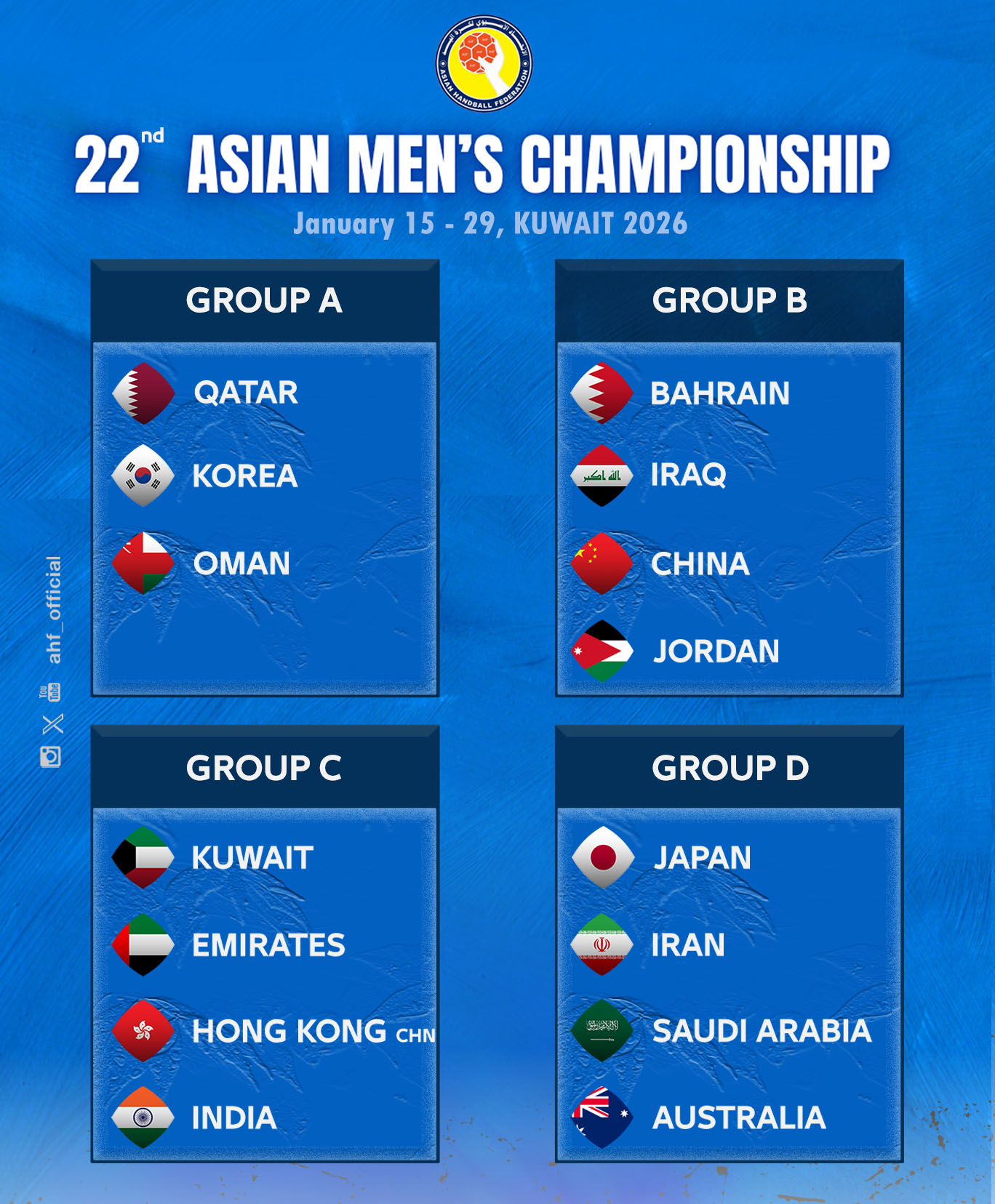
Placed in Group C alongside Kuwait (hosts), United Arab Emirates (UAE), and Hong Kong-China, India faces a daunting uphill battle. Kuwait and UAE are established sides with professional structures, international exposure, and tactical discipline. Hong Kong, the only team India can realistically challenge, has historically finished above India in recent editions.
Read Articles Without Ads On Your IndiaSportsHub App. Download Now And Stay Updated
The biggest handicap comes before the tournament even begins. The 54th HFI Senior Men’s National Championship, India’s top domestic competition, ends on January 12, 2026 just three days before India’s continental opener against Kuwait. This leaves no meaningful preparation window for fitness tapering, tactical alignment, or adjusting to international match intensity. Modern handball demands at least 10–14 days of preparatory training a requirement India cannot meet due to scheduling oversight.
The Group of Imbalance: India vs. Asia’s Better Prepared Programs
Kuwait, An Elite Host With Structure and Stability
India opens against Kuwait, a top-four Asian team that qualified for the 2025 World Championship. Kuwait’s preparation model stands in stark contrast to India’s well-planned camps, friendly matches, foreign coaching expertise, and a core group of players with Asian Games and continental experience. Kuwait’s speed, physicality, and discipline expose India’s biggest weaknesses: defensive structure and transition coverage. A heavy defeat is not just likely it is expected.
United Arab Emirates, A Consistent Mid-Tier Side
The UAE, India’s second opponent, finished 7th in 2024 and consistently competes with Asia’s second-tier sides. Their system is tactically organized and defensively robust qualities India lacks. The UAE’s superior competitive match rhythm and deeper player pool increase the likelihood of another one-sided contest. The goal for India must be damage limitation rather than victory pursuit.
Hong Kong-China, India’s Only Winnable Match
The January 19 clash against Hong Kong is the most important fixture of India’s campaign. Hong Kong finished 13th in 2024 ahead of India and their decline (10th → 11th → 13th in recent editions) mirrors India’s regression, though not as sharply. This match will likely determine whether India finishes last once again.
A victory against Hong Kong is the only realistic competitive goal for India at the 2026 AHC. Everything else scorelines against Kuwait or the UAE, defensive lapses, tactical deficiencies must be treated as secondary. India’s struggles at the continental level are not simply due to stronger opponents—they stem from systemic deficiencies within the domestic setup.
Lack of Professional Club Affiliation: One of the most alarming indicators is that several national team players have no club affiliation, despite the existence of the Premier Handball League (PHL). Handball is a high-speed, high-contact sport requiring daily training, advanced conditioning, and tactical drilling. Without club-level competition and professional routines, athletes cannot sustain international readiness. India’s repeated collapse on defense conceding an average of 41 goals per match in recent international competitions is a direct result of this structural gap.
Domestic–International Calendar Conflict: The scheduling of India’s top domestic championship immediately before a major international event undermines preparation. This pattern has persisted for years. Without planning for athlete recovery, centralized tactical camps, and international exposure, India enters the AHC fatigued and underprepared.
The PHL Paradox: The PHL, launched with much promise and sanctioned by the Asian Handball Federation, has yet to become the national team’s talent pipeline. Either top players aren’t playing the league, or the league’s professional standards haven’t been integrated into national team selection. Without alignment between league performance and international squad building, the PHL’s potential remains untapped.
Success for India in Kuwait cannot and should not be defined by reaching the Main Round or competing with top-tier teams. Instead:
- Beat Hong Kong and avoid the last-place bracket.
- Reduce the defensive collapse margin against Kuwait and UAE.
- Lay groundwork for long-term reforms in player development and scheduling.
Even a single tournament win would mark progress compared to India’s last-place finish in 2024.
To break out of the bottom tier of Asian handball, India needs systemic reform, not tactical tweaking:
- Mandatory professional club contracts for all national team players.
- A defense-first development model to address the chronic 40+ goals conceded pattern.
- Calendar alignment ensuring India has a minimum 2-week preparatory window before any major championship.
- Formal integration of the PHL into national team selection pathways.
The 2026 Asian Championship will reveal the gap between India and Asia’s elite but more importantly, it should catalyze the changes needed to close that gap meaningfully.


