

When the final ball was bowled at Navi Mumbai’s DY Patil Stadium on November 2, 2025, and India’s women were crowned World Champions for the first time, the defining image wasn’t of fireworks or celebrations it was of captain Harmanpreet Kaur bending to touch the feet of her coach, Amol Muzumdar, before breaking into a tearful embrace.
It was a gesture loaded with emotion, respect, and redemption. For Muzumdar the man who scored more than 11,000 first-class runs but never wore the India cap that moment marked the culmination of a lifetime’s worth of perseverance finally finding purpose.
Born on November 11, 1974, Amol Anil Muzumdar grew up amid the heartbeat of Indian cricket Mumbai’s Shivaji Park maidans. His father, a modest club cricketer, introduced him to the sport, and under the guidance of legendary coach Ramakant Achrekar, he joined Sharadashram Vidyamandir the same breeding ground that produced Sachin Tendulkar and Vinod Kambli.
As a teenager, Amol was often mentioned in the same breath as Tendulkar. The diminutive right-hander possessed textbook technique, silken timing, and the calm assurance of a future great. Yet, destiny chose a cruel metaphor early on. In a 1988 Harris Shield semi-final, as a 13-year-old padded up next to bat, Tendulkar and Kambli went on to compile an unbeaten 664-run partnership. The innings was declared before Amol could face a single ball.
That unplayed innings would foreshadow a career defined by patience, quiet excellence, and the endless wait for an opportunity that never came.

When Muzumdar made his first-class debut for Mumbai in 1993-94, he announced himself in spectacular fashion scoring a world-record 260 on debut against Haryana. It was the kind of start that should have guaranteed an India call-up. But the timing was merciless. His peak coincided with India’s golden middle order: Tendulkar, Dravid, Ganguly, and Laxman. There was no vacancy for another artist at No. 4 or 5.
Over 171 first-class matches, Muzumdar amassed 11,167 runs at an average of 48.13, with 30 centuries and 60 fifties a record that would have made him an automatic pick in almost any other era. He became Mumbai’s highest run-scorer in the Ranji Trophy and briefly held the record for most runs in the tournament’s history.
And yet, despite being one of the most consistent batsmen of his generation, the India cap never arrived. Muzumdar’s contemporaries, such as Hrishikesh Kanitkar and Shiv Sunder Das, played for India with lesser averages. His exclusion wasn’t a failure of ability, but of circumstance — he was simply born into a generation overflowing with genius.
He would later reflect, with characteristic humility: “Cricket gave me everything, except the cap.”
Turning Pain into Purpose
When he finally retired in 2014, Muzumdar could have walked away embittered. Instead, he found renewal in coaching. If the game had denied him a place as a player, he would earn his redemption by helping others achieve what he could not. His early coaching stints came with India’s Under-19 and Under-23 teams, where he became known for his calmness and clarity. Players respected his ability to simplify complex technical flaws an attribute forged from years of introspection. His stint with Rajasthan Royals in the IPL, consultancy work with the Netherlands, and interim coaching role for South Africa added international experience to his portfolio.
Muzumdar’s coaching philosophy was built on empathy. Having lived through the loneliness of exclusion, he knew how to connect with players navigating pressure, insecurity, and expectation. His mantra was simple — “Stay calm, stay honest, stay ready.”
In October 2023, the BCCI appointed Amol Muzumdar as head coach of the Indian women’s team. The decision sparked skepticism: a man with no international experience coaching a side searching for world dominance? But Muzumdar saw it as destiny’s second chance an opportunity to fulfill his dream by proxy, through a group of women equally hungry for respect and success.
When he took over, the team was talented but inconsistent. They had the stars Smriti Mandhana, Harmanpreet Kaur, Deepti Sharma but lacked belief and structure. Muzumdar’s first job wasn’t tactical; it was psychological. He fostered a culture of accountability without fear, of discipline without rigidity. “You are all match-winners,” he told his players repeatedly, instilling ownership rather than dependence.
The Redemption Stage: 2025 Women’s ODI World Cup
The World Cup, hosted in India from September 30 to November 2, became the canvas for Muzumdar’s greatest test and ultimate vindication. The campaign began shakily. India suffered early batting collapses, dropped catches, and a narrow defeat to England after losing their nerve in a chase. The critics circled, questioning whether Muzumdar was out of his depth. Inside the dressing room, however, something shifted.
Following the England loss, Muzumdar addressed the team with rare intensity. Harmanpreet later revealed it wasn’t an angry outburst, but a deeply emotional speech that struck home. He reminded them that self-belief was non-negotiable. From that point, the team began playing with composure that mirrored their coach.
He backed struggling players, made bold calls temporarily benching Jemimah Rodrigues and Shafali Verma before bringing them back stronger and emphasized process over panic. The message was consistent: “We just need to get one more run than the opponent.”
India’s semifinal against Australia on October 30 became the defining chapter of Muzumdar’s coaching career. Chasing a daunting 339, the Indian women faced the might of a team unbeaten in 16 matches. Under pressure, Muzumdar didn’t issue elaborate instructions. His simplicity steadied nerves. The result was historic Jemimah Rodrigues’ unbeaten 127 and Harmanpreet Kaur’s 89 guided India to a five-wicket win and the highest successful chase in women’s ODI history.
It was a victory of belief, composure, and faith virtues that Muzumdar had lived by all his life.
In the final against South Africa, India batted first and posted 298/7, led by Shafali Verma’s 87, Deepti Sharma’s 58, Smriti Mandhana’s 45, and Richa Ghosh’s 34. South Africa, anchored by Laura Wolvaardt’s fighting century, fell short at 246, handing India a 52-run win and their maiden World Cup title.
As the players erupted in joy, Muzumdar stood at the boundary, motionless, tears welling in his eyes. The man who had spent his youth waiting for a turn that never came had finally led India to its greatest cricketing triumph. When Harmanpreet Kaur bowed to touch his feet, it wasn’t just respect for a coach it was acknowledgment of a man who turned unfulfilled dreams into the nation’s proudest moment.
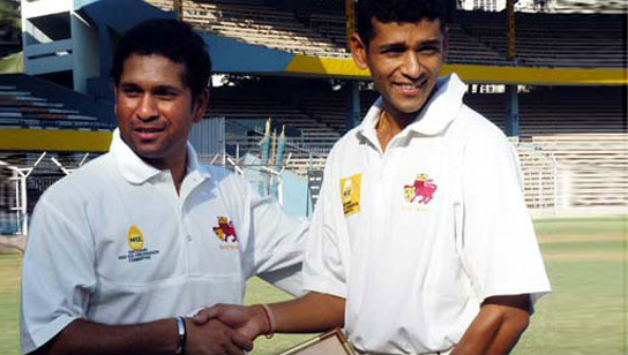
Moments later, Muzumdar walked to the center, planted the tricolour on the pitch, and looked skyward a silent thank you to the game that had tested him relentlessly before finally setting him free.
Amol Muzumdar’s triumph goes beyond silverware. It is the story of how heartbreak can be transformed into hope, how unrecognized greatness can be repurposed into generational success. His journey challenges Indian cricket’s obsession with caps and celebrity. For years, he was cited as the “unluckiest man in Indian cricket.” But history has rewritten that label. Muzumdar’s victory redefines success not as personal fame, but as the ability to elevate others. His calm leadership, data-backed planning, and emotional intelligence provided the foundation for India’s historic World Cup run.
In him, the women’s team found not just a strategist but a mentor who taught them how to be fearless, disciplined, and self-assured.
Epilogue: The Boy Who Finally Batted
On that November night in 2025, as the crowd roared and the tricolour fluttered, it was as if the 13-year-old boy from Shivaji Park finally got his turn at the crease. Amol Muzumdar may never have played a single match for India, but his fingerprints are now forever etched on the country’s greatest cricketing triumph.
He didn’t need a cap to make history he wore his patience, resilience, and grace as his true badge of honour. And in guiding India’s women to glory, Amol Muzumdar finally completed the innings destiny had once denied him.


