
Nepal Eye Asian Games 2026 Spot as Tough Indonesia and Thailand Challenge Awaits in Qualifiers
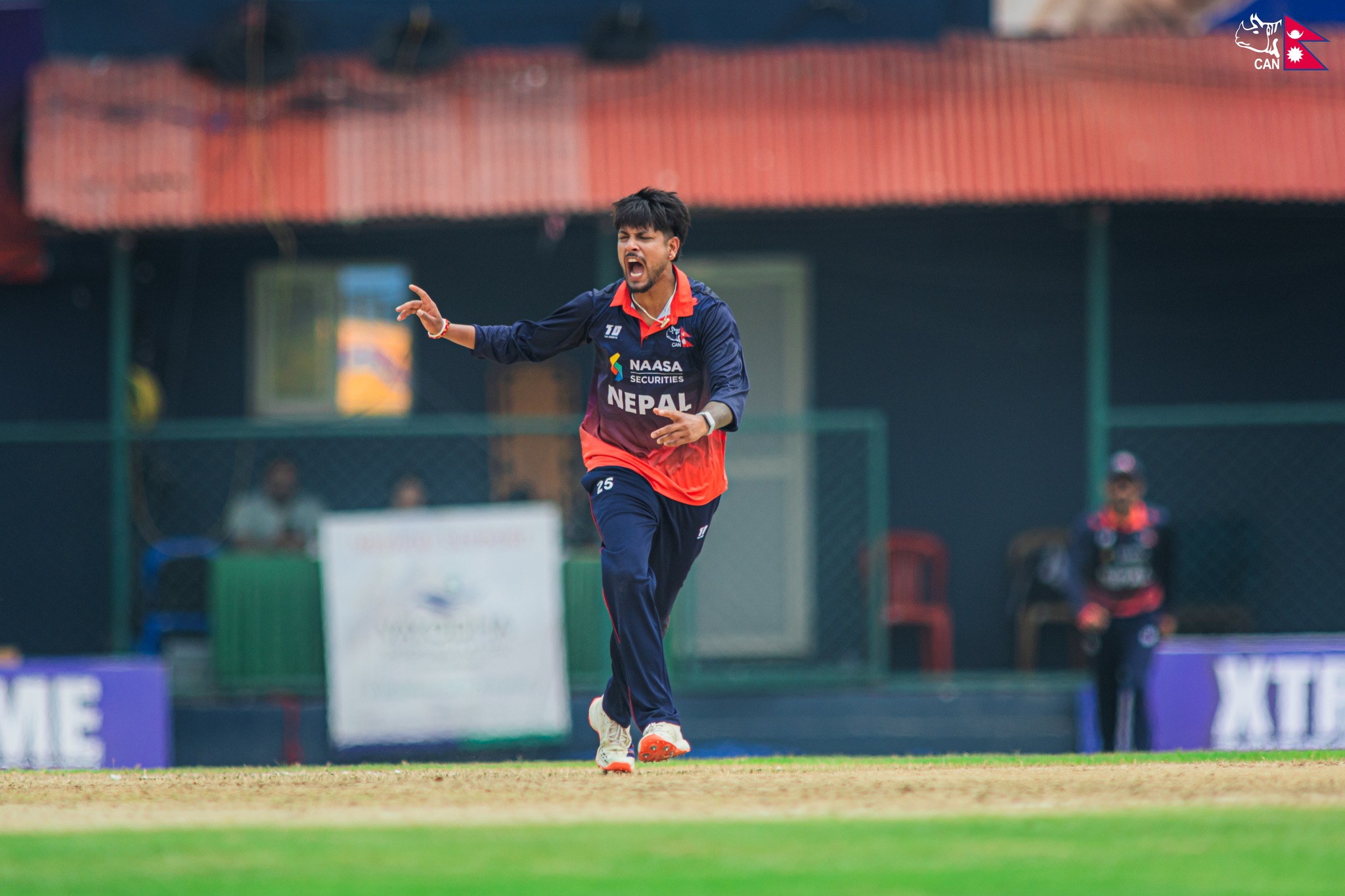
Nepal will enter the Asian Games2026 Men’s Cricket Qualifiers as one of the strongest Associate sides in Asia, with crucial group-stage matches against Indonesia and Thailand set to determine their path toward the main draw in Japan.
The tournament, scheduled in Singapore from May 31 to June 9, carries enormous significance for emerging Asian cricket nations. Every match in the event will have official T20 International status, adding both ranking value and competitive importance. For Indian cricket followers, the qualifiers also hold relevance because the successful teams will eventually join pre-qualified Asian heavyweights India, Pakistan, Sri Lanka, Bangladesh, Afghanistan, and hosts Japan at the 2026 Asian Games in Aichi-Nagoya.
Nepal have been drawn alongside Indonesia and Thailand in Group A and will begin their campaign against Indonesia on May 31 before facing Thailand on June 4. On paper, Nepal clearly enter the group as overwhelming favorites. The rise of Nepal cricket over the last few years has transformed them into one of the most competitive Associate teams globally. Unlike many other emerging Asian sides, Nepal now possess International franchise experience, strong spin depth, proven match-winners & recent exposure against higher-quality opposition
The squad is also filled with players already familiar to Indian audiences through domestic tournaments and ICC events.
The biggest threat in Nepal’s setup continues to be star leg-spinner Sandeep Lamichhane. Widely regarded as one of the best Associate cricketers in the world, Lamichhane’s ability to exploit slow Asian surfaces makes him particularly dangerous in Singapore, where dry and abrasive wickets are expected to assist spin heavily.
Alongside him, Dipendra Singh Airee remains Nepal’s most explosive batting asset. Airee already holds the record for the fastest T20I half-century in international cricket history, reaching the landmark in just nine balls earlier this year. His finishing ability gives Nepal a level of lower-order firepower few Associate nations can match.
The presence of aggressive opener Kushal Bhurtel, captain Rohit Paudel, experienced seamer Sompal Kami, and left-arm spinner Lalit Rajbanshi further strengthens Nepal’s balance.
Indonesia enter the tournament after a challenging sequence of international results. They recently suffered heavy bilateral defeats against Sweden and Malaysia before also struggling during the ICC East Asia-Pacific regional qualifiers. While Indonesia have steadily improved structurally over recent years, the batting unit has consistently struggled against disciplined spin bowling something that could become a major issue against Nepal.
Players like Kadek Gamantika and Ferdinando Banunaek will need to absorb pressure effectively if Indonesia are to remain competitive. However, against Nepal’s multi-layered bowling attack, especially on slow Singapore tracks, Indonesia may find scoring boundaries consistently extremely difficult.
Thailand enter the qualifiers with a more defensive tactical structure. Unlike Nepal, Thailand’s strength lies less in explosive batting and more in disciplined bowling, particularly spin. Their attack focuses heavily on restricting scoring rates and forcing errors rather than aggressively hunting wickets. However, the concern remains their batting depth.
Thailand have regularly struggled to post or chase totals above 140 against stronger opposition, and against Nepal’s experienced bowling attack that limitation could again become decisive. Historically, Nepal have also dominated this matchup. The only previous T20I meeting between the two sides came in 2020 when Nepal bowled Thailand out for just 66 and completed the chase in only 5.3 overs.
The Singapore surfaces are expected to play a major role in the group stage. Due to infrastructure limitations and heavy shared usage of grounds, wickets in Singapore generally become slow, dry, and spin-friendly. That naturally suits Nepal’s squad composition far more than Indonesia or Thailand. Lamichhane’s leg-spin combined with Lalit Rajbanshi’s left-arm control could become exceptionally difficult to handle on deteriorating tracks.
For Indian audiences accustomed to watching spin dominate on subcontinental wickets, Nepal’s attack may resemble many of the tactical strengths often associated with lower-tier IPL bowling combinations.
The stakes surrounding the tournament are massive. Only the successful teams emerging from qualification will advance to the main draw of the Asian Games cricket competition in Japan later this year.
The qualified teams will join India, Pakistan, Sri Lanka, Bangladesh, Afghanistan & host Japan in what is expected to be one of the strongest Asian Games cricket tournaments ever staged. For Nepal especially, qualification would represent another major step in their long-term ambition of becoming a full ICC member nation in the future.
From an Indian cricket perspective, Nepal’s rise remains one of the most interesting stories in Asian cricket development. The passion surrounding cricket in Nepal has grown rapidly over the last decade, and the country now consistently produces players capable of competing at increasingly higher international standards. While there still remains a large gap between Nepal and elite Full Member nations like India, their improvement in professionalism, tactical awareness, and player development has become impossible to ignore.
With experienced leadership, recent match sharpness, and conditions likely to suit them perfectly, Nepal will start Group A as clear favorites to progress toward the Asian Games main draw.
But in tournament cricket, particularly in T20Is, one poor game can change everything — and Indonesia and Thailand will still believe they have an opportunity to produce a major upset in Singapore.
Comments (0)
to post comments, replies, and votes.
Loading comments…