
AFC U-17 Women’s Asian Cup 2026: India U-17 Women Fall to Japan Despite Resilient First-Half Display
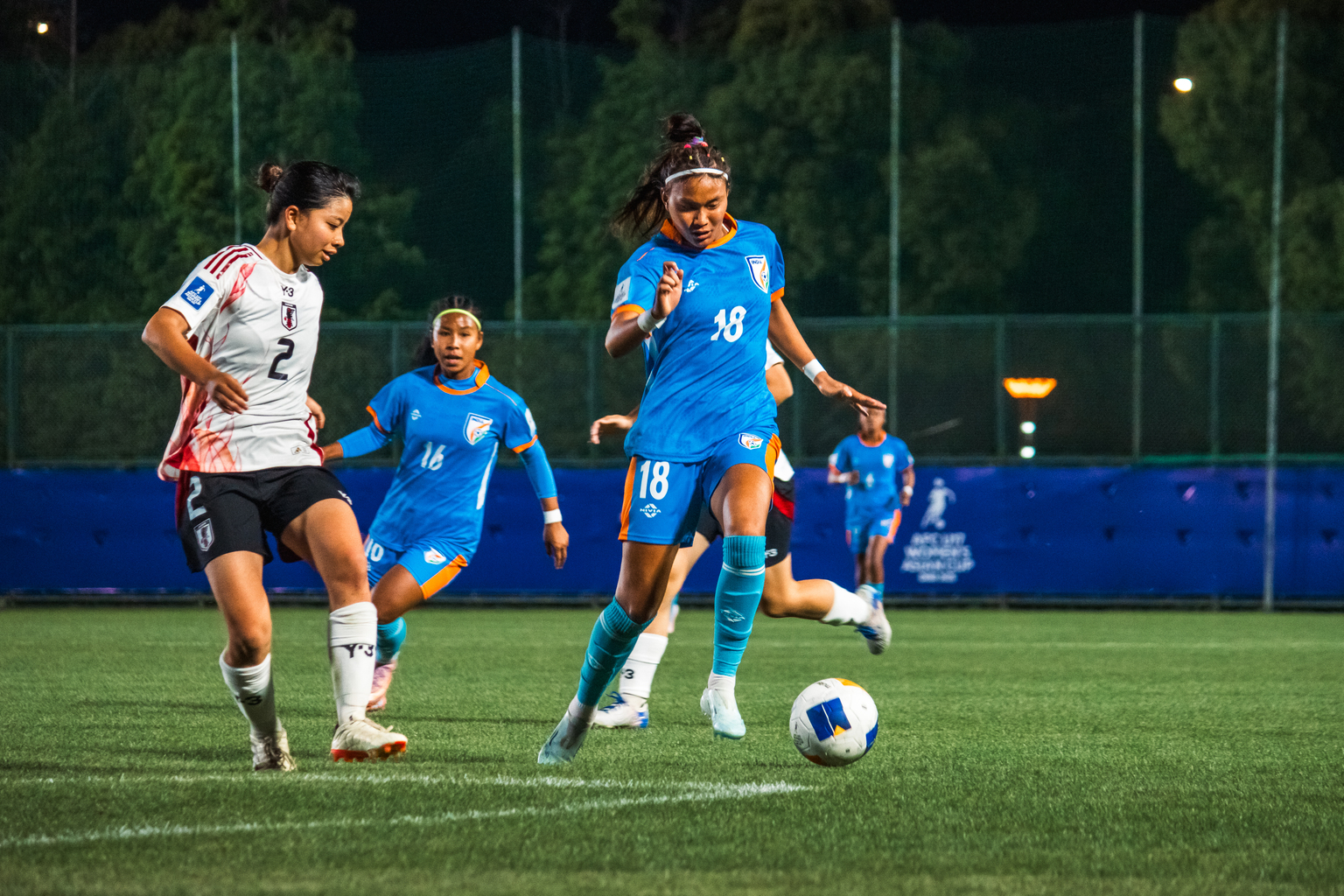
India’s U-17 women’s team produced a disciplined defensive performance for large parts but eventually went down 0-3 to Japan in their AFC U-17 Women’s Asian Cup 2026 Group B encounter in Suzhou on Tuesday.
After holding one of Asia’s strongest youth sides goalless for nearly an hour, the Young Tigresses conceded three second-half goals, with Yumi Hayashi opening the scoring in the 59th minute before Yuzuha Ikeda added a brace late in the game to seal the result. The defeat leaves India without a point from their opening two matches and at the bottom of Group B, while Japan moved to the top with six points from two games.
From the outset, Japan imposed their structure and tempo.
Using width effectively through Mashiro Yamaji and Futaba Noda, they stretched the Indian defence and delivered a steady stream of crosses into the box. However, India responded with a compact and organised defensive setup, ensuring that central spaces remained tightly guarded. Captain Abhista Basnett, alongside Elizabed Lakra, anchored the defensive line with composure, while full-backs Divyani Linda and Ritu Badaik maintained positional discipline to prevent overloads in wide areas.
India’s approach was clear absorb pressure, maintain shape, and look for opportunities in transition.
For much of the first half, this strategy proved effective. Despite sustained Japanese possession, clear-cut chances were limited. Nanami Kurita and Asuka Tanaka combined well in attacking areas, but India’s defensive block ensured that their final passes rarely translated into decisive moments.
A key figure in India’s resistance was goalkeeper Munni.
Alert and composed, she dealt confidently with crosses and long-range attempts, stepping off her line when required and maintaining control in high-pressure situations. Her first significant intervention came in the 20th minute, when she comfortably gathered Noda’s shot from the right. Japan continued to probe, but India’s defensive discipline held firm. Thandamoni Baskey frequently dropped deep to support the backline, effectively creating an additional defensive layer. The midfield unit worked tirelessly to track runners and close passing lanes, limiting Japan’s ability to exploit central channels.
India also showed glimpses of attacking intent. With Japan pushing a high defensive line, there were spaces available behind their defence. However, India struggled to capitalise on these opportunities, with long balls towards Alva Devi Senjam and Pritika Barman not yielding clear openings. By half-time, Japan had dominated possession and registered a couple of shots on target, but India had succeeded in keeping the contest level a reflection of their organisation and discipline. The second half followed a similar pattern initially.
Japan resumed control, continuing to build patiently and test India’s defensive structure. Kurita came close in the 49th minute with a swerving effort from distance, but Munni once again responded confidently. Moments later, Kurita threatened again with a first-time strike that sailed over the crossbar, signalling increasing pressure on the Indian defence. India, meanwhile, attempted to push higher during transitions, but their attacking sequences remained limited. The physical and technical demands of defending for long periods began to take a toll as the game progressed.
The breakthrough arrived just before the hour mark. In the 59th minute, Asuka Tanaka delivered a precise ball into the box, finding Yumi Hayashi in space. The forward controlled well and finished into the bottom corner, finally breaching India’s resistance. The goal shifted the momentum decisively. Having held firm for nearly an hour, India now faced the challenge of chasing the game against a side known for its control and composure. Japan, buoyed by the lead, increased their attacking intensity.
The second goal came in the 76th minute from a set-piece. Wara Shimizu directed the ball into the path of Yuzuha Ikeda, who finished from close range. The goal exposed India’s vulnerability in dealing with second balls an area that often proves critical in tightly contested matches.
Just five minutes later, Japan added a third. Shimizu once again played a key role, delivering a cross from the right that Ikeda met with a well-placed header to complete her brace and effectively seal the contest. Despite the late goals, India’s overall defensive effort remains a positive takeaway. Against a side that had scored 13 goals in their previous match, the Young Tigresses managed to limit Japan’s effectiveness for significant periods. Their structure, discipline, and collective work rate were evident throughout the match.
However, the game also highlighted areas for improvement. Sustaining defensive intensity over 90 minutes, improving transitions into attack, and capitalising on limited opportunities will be crucial as the tournament progresses. India will now turn their focus to their final group-stage match against Lebanon.
With qualification no longer in their hands, the objective shifts to finishing the campaign on a positive note while continuing to build experience at the continental level. For a young squad, matches like these are part of a larger developmental process. Facing high-quality opposition such as Japan provides valuable exposure, testing both technical ability and mental resilience. While the result may not have gone in their favour, the lessons from this encounter will contribute significantly to their growth.
As the Young Tigresses prepare for their final outing, the emphasis will remain on applying those learnings aiming to convert discipline into results and experience into progression.
Comments (0)
to post comments, replies, and votes.
Loading comments…

.jpg)



.jpg)