
AFC U17 Asian Cup 2026: India U-17 Begin Asian Cup Campaign with Key Clash Against Australia
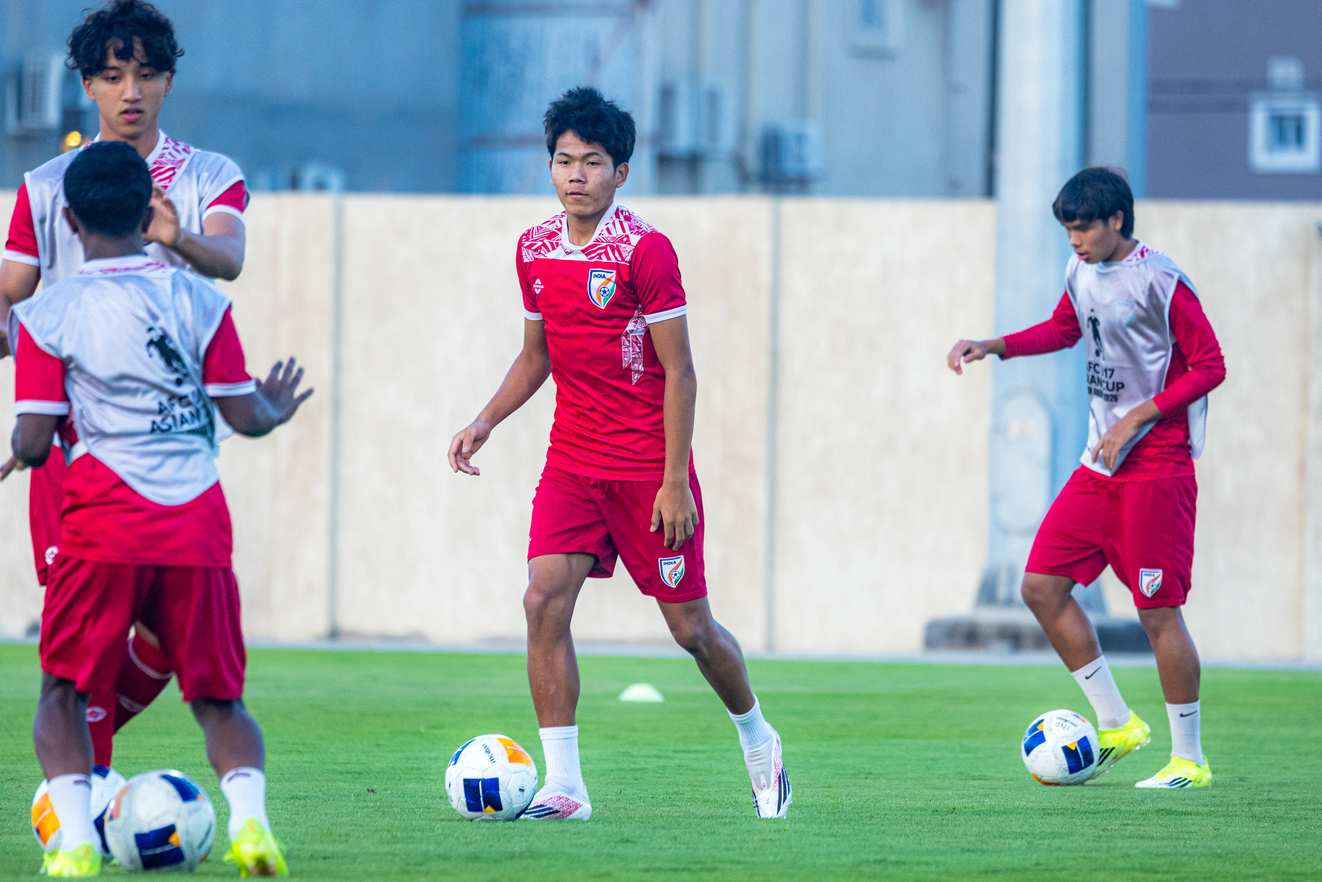
India’s youth football calendar enters a crucial phase as the U-17 men’s team begins its AFC U17 Asian Cup 2026 campaign with a challenging opening fixture against Australia in Jeddah on May 6.
The contest at the King Abdullah Sports City Pitch C marks the start of India’s fourth continental campaign of the year and sets the tone for what lies ahead in a tightly structured group. Placed in Group D alongside Australia and Uzbekistan, India’s pathway has taken a unique shape after the withdrawal of DPR Korea just days before the tournament. With only three teams in the group, the margin for error becomes even narrower each match carries added significance, and consistency across both fixtures will be critical for progression.
The top two teams from the group will advance to the quarter-finals, which also guarantees qualification for the FIFA U-17 World Cup in Qatar later this year. In that context, the opening game against Australia becomes more than just a starting point it is a potential momentum-setter. Head coach Bibiano Fernandes brings considerable experience into this campaign.
Having previously guided India at the AFC U16 Championship in 2018 and the AFC U17 Asian Cup in 2023, Fernandes understands the demands of youth-level continental football. His approach, however, remains rooted in simplicity and clarity. Experience, in his view, is less about altering philosophy and more about managing situations effectively. At this level, where players are still developing both technically and mentally, the ability to stay composed and execute structured plans often proves decisive.
Australia, India’s first opponents, represent a significant test. Known for their physicality, discipline, and structured approach, the Australian side is among the more consistent performers in Asian youth competitions, having reached the semi-finals on multiple occasions. Their style combines high intensity with quick transitions, making them particularly dangerous in moments of turnover.
For India, the focus will be on maintaining defensive organisation while making intelligent decisions in possession. Fernandes has emphasised the importance of compactness ensuring that spaces between lines remain tight and that the team does not get stretched under pressure. Equally important will be the ability to capitalise on limited opportunities, as games at this level are often decided by small margins. India’s preparation for the tournament has been extensive.
The team has undergone a series of international exposure matches against a diverse set of opponents, including Tajikistan, Türkiye, Myanmar, Indonesia, Thailand, Korea Republic, UAE, and Qatar. This varied schedule has provided the squad with experience against different playing styles, helping them adapt tactically and improve decision-making under pressure.
Such preparation is crucial in youth tournaments, where adaptability often determines success. Facing teams with contrasting approaches from technically oriented sides to physically dominant ones equips players with the ability to adjust mid-game, an essential skill in high-level competition.
Captain Dallalmoun Gangte enters the tournament with a clear sense of responsibility. For a young squad, leadership plays a significant role in maintaining composure, particularly in high-pressure situations. Gangte’s role will extend beyond midfield control to influencing the team’s overall tempo and ensuring that communication remains clear across phases of play. His perspective reflects the team’s broader mindset acknowledging the quality of the opposition while focusing on their own preparation and execution.
That internal focus could prove critical. With only two group-stage matches, there is little room for recovery after setbacks. Every phase of play from defensive organisation to attacking transitions must be executed with precision. For India, one of the key areas will be managing transitions.
Against a side like Australia, losing possession in advanced areas can quickly turn into defensive pressure. Maintaining structure during these moments, while also finding ways to progress the ball effectively, will be central to their game plan. At the same time, the tournament offers an opportunity for young players to showcase their potential on a continental stage. Performances here can shape future pathways, not just within the national setup but also at club and international levels. The exposure to high-intensity matches, coupled with the experience of playing in a tournament environment, contributes significantly to player development.
Ultimately, India’s opening fixture against Australia represents both a challenge and an opportunity. A positive result would provide immediate momentum and place the team in a strong position to qualify for the knockout stages. More importantly, it would reinforce the effectiveness of their preparation and approach. As the Blue Colts step onto the pitch in Jeddah, the objective remains clear stay organised, execute the plan, and compete with clarity against one of Asia’s strongest youth sides.
In a tournament defined by fine margins, the ability to deliver in key moments could determine not just the outcome of this match, but the trajectory of India’s campaign.
Comments (0)
to post comments, replies, and votes.
Loading comments…

.avif)