
The growth of Indian sporting ecosystem, the importance of grassroots participation, and the need to nurture future champions were among the key themes discussed during the Grand Sports Conclave held on Day 3 of the Golden Jubilee celebrations of the Sports Journalists Federation of India (SJFI) National Convention at the India Habitat Centre in New Delhi.
The convention, organised by the Delhi Sports Journalists Association (DSJA), brought together leading athletes, administrators, and corporate stakeholders to reflect on the progress of Indian sport and discuss pathways for its continued development.
The conclave featured a distinguished panel that included Raghu Ram Iyer, CEO of the Indian Olympic Association, teenage squash sensation Anahat Singh, India’s star compound archer Jyothi Surekha Vennam, Ness Wadia, co-owner of IPL franchise Punjab Kings, and Remus D’Cruz, Global Head of Brand Strategy at Apollo Tyres.
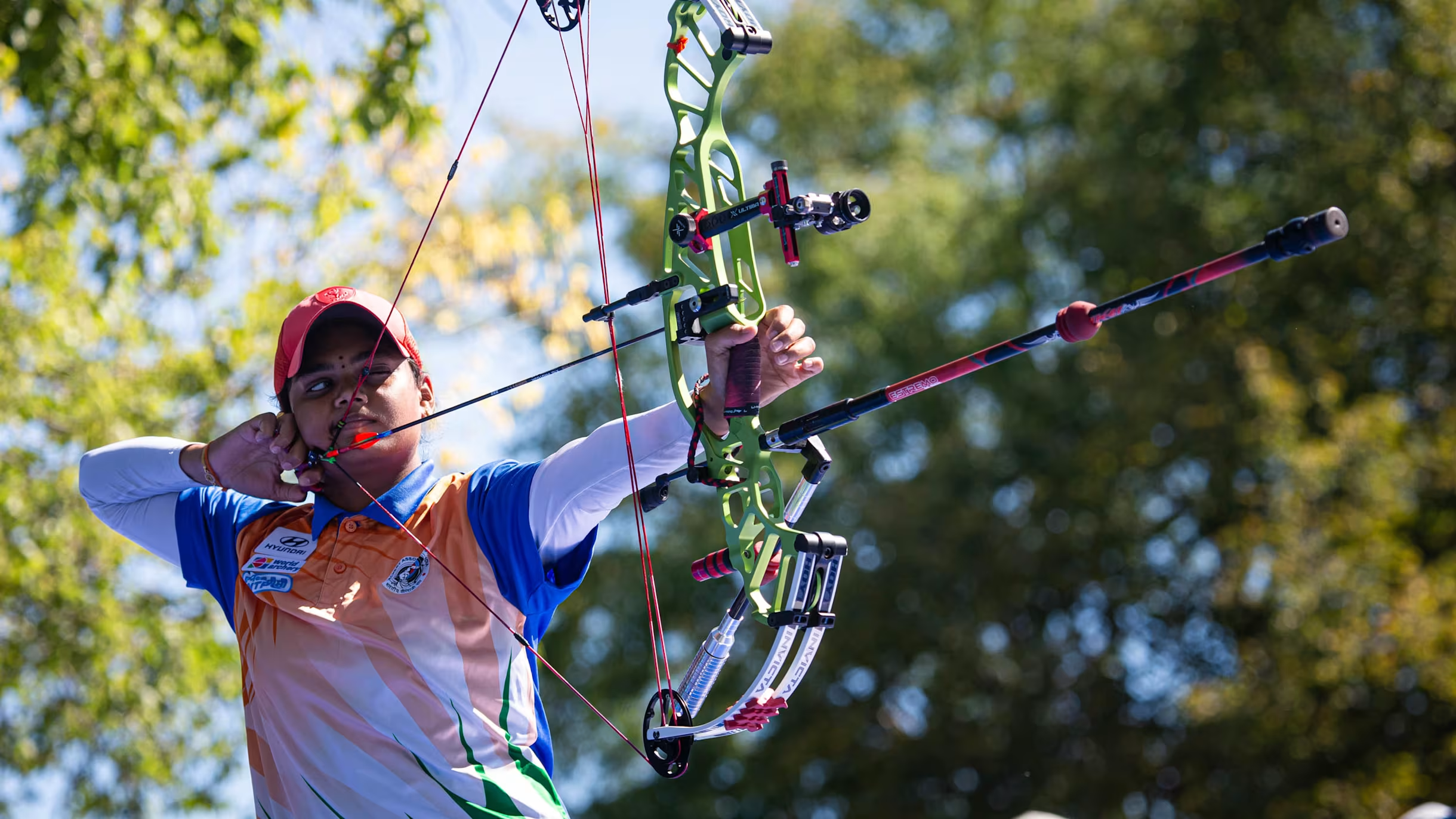
During the discussion, Jyothi Surekha Vennam highlighted how the support structure for Indian athletes has evolved significantly over the years, creating better opportunities for sportspersons to compete and succeed at the highest level.
“When I started competing, the facilities and support systems were very different,” Jyothi said. “Today, the support from government bodies and private organisations has increased significantly. This has helped athletes perform better on the world stage.”
Jyothi, one of India’s most successful compound archers, noted that improved infrastructure, better access to training facilities, and enhanced institutional backing have played a major role in raising the overall standard of Indian sport.
The progress is particularly evident in disciplines that traditionally did not receive widespread attention but have now begun producing consistent international results.
Compound archery, for instance, has witnessed significant global success for India in recent years. With the discipline now set to feature in the Olympic programme, Jyothi emphasised that her focus remains firmly on maintaining consistency and continuing to push her performance levels.
“My focus is on maintaining my performance, improving continuously and earning the opportunity to represent India at the Olympics and win a medal,” she said.
The panel discussion also highlighted the role of international exposure in shaping the careers of young athletes. Teenage squash prodigy Anahat Singh, who has already emerged as one of India’s most promising talents in the sport, shared insights into her journey on the international circuit.
“The last few years on the squash tour have been amazing,” Anahat said. “Competing against top players at a young age has taught me a lot about what it takes to succeed at the highest level.”
The 17-year-old emphasised that facing elite competition regularly has helped her understand the physical and mental demands required to compete at the top level.
She also spoke about the inspiration she draws from interacting with accomplished Indian athletes across disciplines.
“Meeting athletes like Neeraj Chopra and learning from their experiences has been incredibly inspiring,” Anahat said. “It pushes me to keep improving and to believe that Indian athletes can compete with the best in the world.”
The conversation also expanded beyond individual sports to examine the broader evolution of Indian sport over the past decade.
Punjab Kings co-owner Ness Wadia spoke about how the emergence of athletes across multiple disciplines reflects a deeper transformation in India’s sporting culture.
“For me it has always been about sport in India,” Wadia said. “Sitting here alongside champions from different sports shows how much Indian sport has evolved.”
He pointed out that the success of athletes across athletics, shooting, badminton, wrestling, and other Olympic sports demonstrates that India is no longer defined by just one sport.
“It is incredible to see young athletes achieving world-class rankings and aspiring to win Olympic medals,” Wadia said. “I will definitely be glued to the television watching them compete and make the country proud.”
Wadia also emphasised that representing the country at the highest level remains one of the greatest achievements for any athlete.
“For anyone to represent their country at the highest level is incredible,” he said. “Seeing athletes from different disciplines achieve global success shows that Indian sport today is much bigger than just one game.”
The Grand Sports Conclave formed one of the key highlights of the SJFI National Convention’s Golden Jubilee celebrations, providing a platform for athletes, administrators, and corporate leaders to share perspectives on the future of Indian sport.
As discussions at the conclave highlighted, India’s sporting landscape is undergoing a period of transformation. Improved infrastructure, stronger support systems, greater international exposure, and increased corporate involvement are gradually reshaping the ecosystem.
Watch Indian Live Scores and Play Quiz – Download IndiaSportsHub App
With a new generation of athletes emerging across disciplines and experienced champions continuing to lead the way, the collective goal remains clear to strengthen the foundations of Indian sport and build a system capable of producing sustained global success in the years ahead.


