In a landmark recognition for grassroots sports development in India, former Indian volleyball captain Abhijit Bhattacharya has been named the Global Winner of the 2025 International Olympic Committee (IOC) Gender Equality, Diversity and Inclusion (GEDI) Champions Award.
The prestigious honour will be formally presented on July 9, 2026, in Birmingham, England, during the International Working Group Global Summit on Women and Sport.
The award marks a major milestone not only for Bhattacharya but also for the community-driven sports movement he founded the Brahmaputra Volleyball League (BVL) which has transformed the sporting landscape across rural Assam.
A Recognition of Grassroots Impact
The IOC GEDI Champions Award celebrates individuals who have made exceptional contributions toward advancing gender equality, diversity, and inclusion in sport. Bhattacharya’s selection as the global winner signals a shift in international recognition toward community-led sporting models that empower under served populations.
Through the Brahmaputra Volleyball League, Bhattacharya has built a system that brings sport to villages across Assam while ensuring equal participation for boys and girls. What began as a small initiative aimed at providing volleyball equipment to rural children has grown into one of India’s most impactful grassroots sports programs.
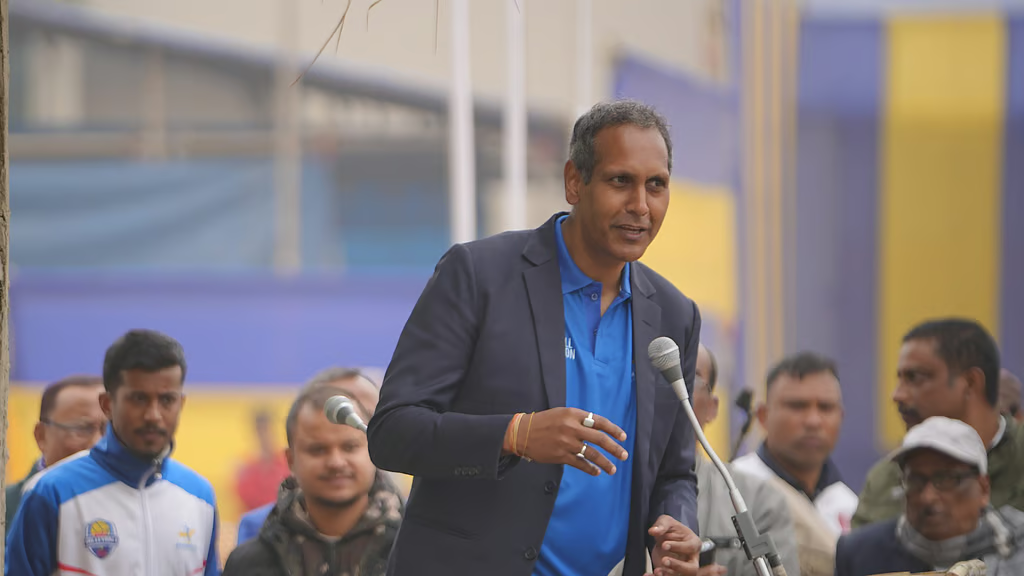
Bhattacharya’s journey into grassroots sports development began after a distinguished playing career. Between 1995 and 2005, he represented India in more than 100 international matches and served as captain of the national men’s volleyball team from 2003 to 2005. He also made history as the first player from India’s northeast region to captain the national team, a milestone that brought visibility to athletes from a region often overlooked in mainstream Indian sport.
Following his retirement from international volleyball in 2006, Bhattacharya shifted his focus toward development work. Combining his sporting experience with his professional background in corporate social responsibility, he began exploring ways to make sport accessible to children in remote communities.
That vision eventually led to the creation of the Assam Volleyball Mission 100 (AVM100) in 2019, an initiative that distributed volleyballs to rural villages and encouraged children to play the sport.
Birth of the Brahmaputra Volleyball League
The success of AVM100 paved the way for a much larger project the Brahmaputra Volleyball League, launched in 2020.
Unlike conventional sports leagues, the BVL operates on a community ownership model. Each participating village functions as a team “franchise,” with local residents managing practice sessions, organizing matches, and supporting players. This decentralized approach ensures that the league belongs to the community rather than being controlled by external organizations. It also fosters cooperation between villages, strengthening social ties across the region.
The growth of the league has been remarkable. From just 50 teams in its inaugural season, the BVL has expanded to more than 400 teams across over 150 villages, engaging more than 12,000 children across Assam.
Watch Indian Live Scores and Play Quiz – Download IndiaSportsHub App
A central pillar of Bhattacharya’s work and a key reason for the IOC’s recognition is the league’s strong commitment to gender equality. The BVL requires participating villages to field equal numbers of boys’ and girls’ teams across multiple age groups. As a result, the participation ratio between boys and girls in several categories has approached near parity.
For many girls in rural Assam, the league has provided their first opportunity to participate in organized sport. In communities where traditional norms sometimes discourage girls from playing sports, volleyball has become a powerful tool for social change. The league has also introduced programs addressing issues such as menstrual health awareness, safe sporting environments, and leadership training for female athletes.
These initiatives have helped create an environment where girls not only play sport but also develop confidence and leadership skills.
Beyond Sport: Building Communities
The impact of the Brahmaputra Volleyball League extends far beyond the volleyball court. In many villages, the league has contributed to improved school attendance, healthier lifestyles, and stronger community engagement. Young participants often stay away from harmful habits such as tobacco use and instead focus on training and competition. The league also generates local economic activity during its season, with villages organizing food, travel arrangements, and match-day events for visiting teams.
Another unique aspect of the league is its “team adoption” model, where supporters from around the world sponsor teams by funding equipment, travel, and kits. This approach allows the program to remain financially sustainable without relying heavily on corporate sponsorship.
Bhattacharya’s work has attracted international attention in recent years. The FIVB Volleyball Foundation has recognized the BVL as a pioneering grassroots model and has supported coaching programs in the region. In addition, partnerships with organizations such as UNICEF have helped expand the league’s impact beyond sport. Youth participants are now trained as community ambassadors, promoting issues such as gender equality, child rights, and education.
The league has also embraced technology, broadcasting hundreds of matches each season through low-cost digital streaming. This innovation has allowed families and supporters across the world to follow games played in remote villages.
Bhattacharya’s recognition as the IOC’s Global GEDI Champion places India firmly on the global stage for inclusive sports development. The award acknowledges not only his personal leadership but also the collective effort of volunteers, communities, and young athletes who have built the Brahmaputra Volleyball League into a powerful social movement.
When Bhattacharya receives the award in Birmingham in July 2026, it will represent more than an individual achievement. It will symbolize the success of a vision that began in the villages of Assam a vision that believes sport can empower communities, break social barriers, and create opportunities for the next generation.
And through volleyball courts scattered across rural landscapes, that vision continues to grow one match, one village, and one young athlete at a time.