
Gujarat 2026: Laying the Groundwork to Become India’s Global Sports Nerve Centre

Sports
Spread the love

0
(0)

The year 2026 is set to mark a decisive turning point in Gujarat’s Global sports and economic trajectory.

Long known as one of India’s industrial and commercial powerhouses, the state is now positioning itself as the country’s most ambitious and integrated sports hub. This transformation is not driven by a single marquee event, but by a carefully sequenced, government-led strategy aimed at building a permanent ecosystem that can sustain elite sport, global events, and allied industries. By 2026, Gujarat aims to be fully “event-ready”, with its eyes firmly fixed on hosting the centenary Commonwealth Games in 2030 and ultimately the 2036 Olympic Games.

At the heart of this vision is a decade-long roadmap that treats 2026 as a threshold year. The announcement in late 2025 that Ahmedabad will host the 2030 Commonwealth Games provided international validation of Gujarat’s strategy. These Games are being positioned as a final stress test for a potential Olympic bid, with the International Olympic Committee expected to decide on the 2036 host by 2027.

The groundwork for this ambition will accelerate in 2026 with the commencement of construction at two flagship projects the Sardar Vallabhbhai Patel Sports Enclave (SVPSE) and the Police Academy Sports Hub signalling a shift from planning to execution.

The state’s push into sports is backed by a strong policy and fiscal architecture. At the national level, India’s sports budget for 2025–26 has risen sharply to ₹3,794 crore, reflecting a broader prioritisation of elite performance and grassroots development. Gujarat has aligned itself with this momentum through its revised State Sports Policy, which focuses on decentralised talent identification, infrastructure creation, and financial incentives for athletes.

Complementing this are legislative reforms such as the National Sports Governance Act and updated anti-doping laws, designed to bring Indian sport closer to international best practices a prerequisite for hosting global mega-events.

Infrastructure development is the most visible expression of Gujarat’s ambition. The SVPSE, spread across more than 200 acres in Motera, is envisioned as a compact, Olympic-standard sports district anchored by the 132,000-capacity Narendra Modi Stadium. Beyond cricket, the enclave will house a 50,000-seat football stadium, a world-class aquatics centre, a major indoor arena, and a dedicated tennis complex. Importantly, the design philosophy emphasises modularity, allowing venues to be scaled down or repurposed after major events, addressing the long-standing “white elephant” concern associated with mega-sporting infrastructure.

Read Articles Without Ads On Your IndiaSportsHub App. Download Now And Stay Updated

Complementing this spectator-focused complex is the Naranpura Sports Complex, which forms the high-performance backbone of Gujarat’s sporting ecosystem. Completed in 2025 at a cost of over ₹800 crore, Naranpura is India’s largest indoor facility and can host training for 18 sports simultaneously.

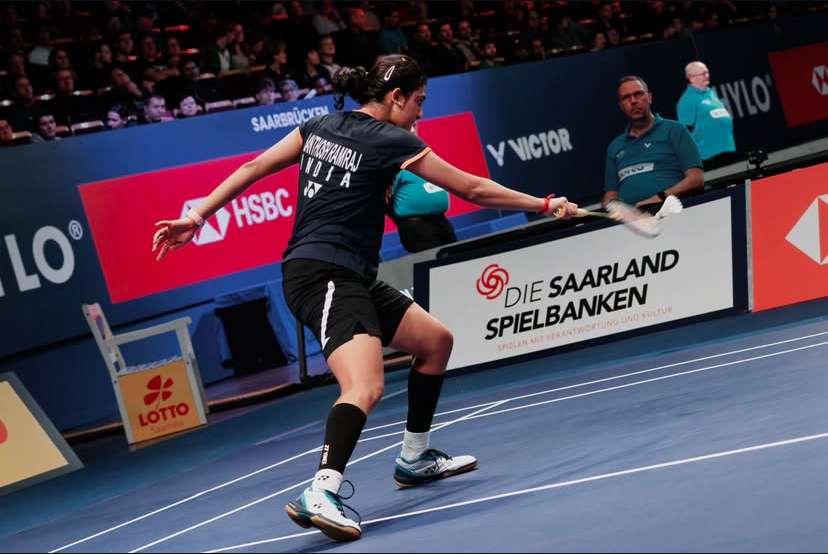
Equipped with Myrtha Pools technology for swimming and extensive facilities for badminton, wrestling, judo and table tennis, it plays a central role in elite athlete preparation and talent development. Alongside these hubs, Gujarat is developing over 30 additional sports complexes across multiple districts, ensuring that the benefits of investment extend beyond Ahmedabad alone.

The sports push is also acting as a powerful economic catalyst. Gujarat is deliberately positioning itself as a “learning ground” for sports management, event logistics, branding, and sports technology. Local businesses traditionally focused on manufacturing and logistics are pivoting towards sports-specific services such as athlete transport, venue operations, and broadcast support.

Global Sports
Credit Sports in Gujarat

Corporate investment has followed suit, with major conglomerates like the Adani Group, Torrent Group and Reliance Foundation viewing sport as a strategic asset class rather than mere sponsorship. Franchise ownership across leagues and investments in grassroots academies underline the depth of this shift.

Technology and innovation form another pillar of Gujarat’s strategy. Leveraging the state’s startup ecosystem, particularly through i-Hub Gujarat, sports-tech ventures focused on performance analytics, wearables, fan engagement and venue management are being actively encouraged. This aligns with the IOC’s push towards sustainability and digital-first engagement.

Gujarat’s Olympic vision incorporates carbon-neutral venues, renewable energy integration, and smart infrastructure, ensuring that future events meet modern environmental benchmarks while also reducing long-term operational costs.

Equally critical is urban mobility and connectivity. By 2026, Ahmedabad aims to ensure that major venues are accessible within 30 minutes through expanded metro and BRTS networks. The Sardar Vallabhbhai Patel International Airport is set to open a new terminal, doubling capacity and easing international travel. Looking further ahead, the Mumbai–Ahmedabad bullet train corridor will integrate Gujarat’s sports hub with India’s financial capital, creating a powerful regional sports and economic corridor by the time of the 2030 Games.

Read Articles Without Ads On Your IndiaSportsHub App. Download Now And Stay Updated

Talent identification remains central to the long-term vision. Programs such as Khel Mahakumbh, which has seen participation from millions across multiple disciplines, feed directly into elite support schemes like Shaktidoot, offering financial backing for training and international exposure. District-level sports schools further strengthen this pipeline, ensuring that infrastructure investment is matched by athlete development on the ground.

The scale of Gujarat’s ambition does carry risks. Mega-events are notorious for cost overruns and social displacement if not managed carefully. Acknowledging these lessons, planners are emphasising community integration, year-round venue usage, and sustainability to ensure lasting legacy rather than short-term spectacle.

As 2026 approaches, Gujarat stands at a crucial juncture. The transition from vision to execution will determine whether it can truly establish itself as India’s premier global sports nerve centre.

If successful, the state will not only host landmark events but also redefine how sport, economy, and urban development intersect in modern India turning aspiration into enduring legacy  .

How useful was this post?

Click on a star to rate it!

Average rating 0 / 5. Vote count: 0

No votes so far! Be the first to rate this post.


Spread the love

Leave a Reply

IndiaSportsHub
Privacy Overview

This website uses cookies so that we can provide you with the best user experience possible. Cookie information is stored in your browser and performs functions such as recognising you when you return to our website and helping our team to understand which sections of the website you find most interesting and useful.