
Tejas Shirse Defends Crown with Meet Record at Federation Cup 2026 as Indian Hurdling Continues to Rise
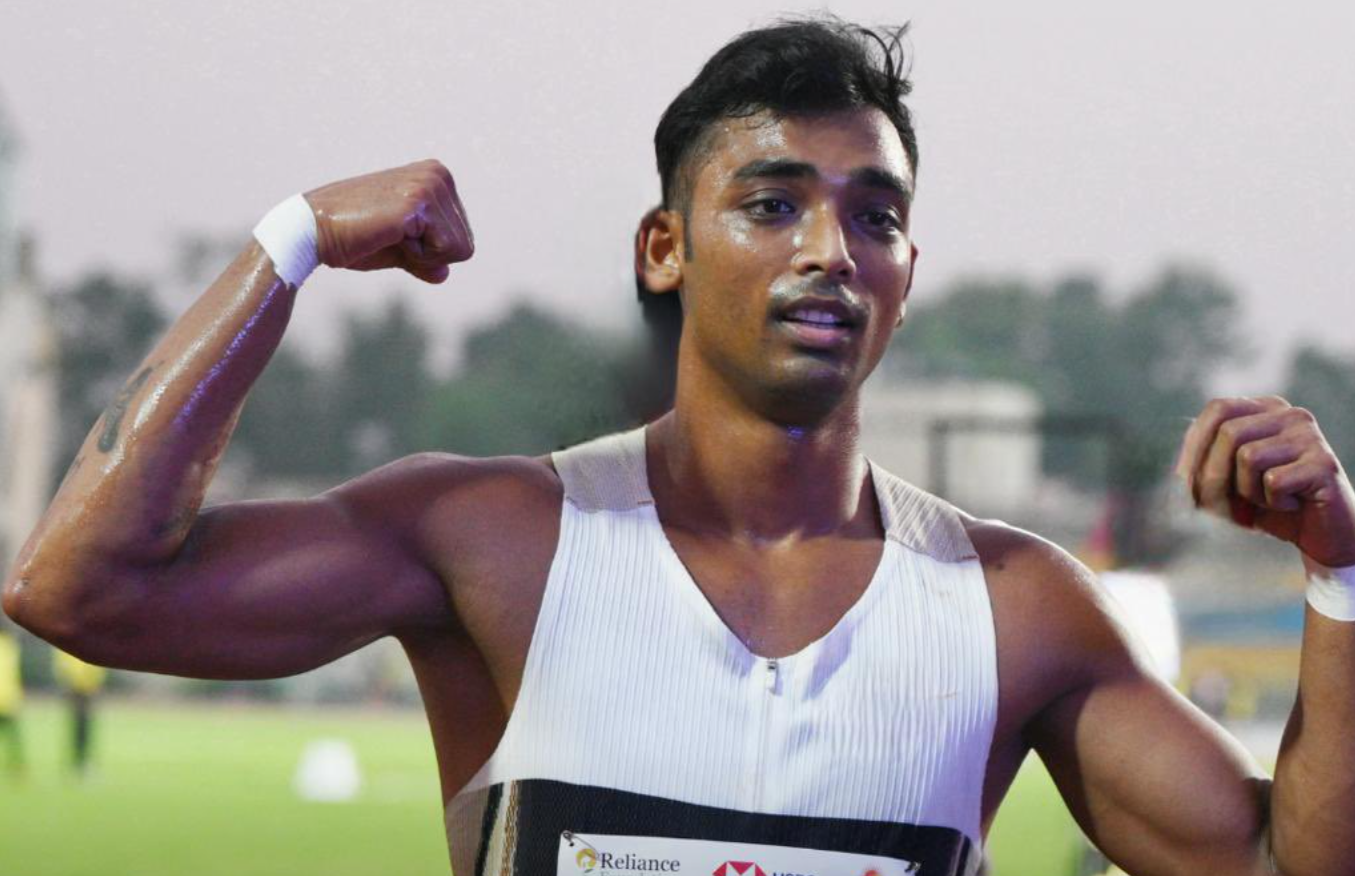
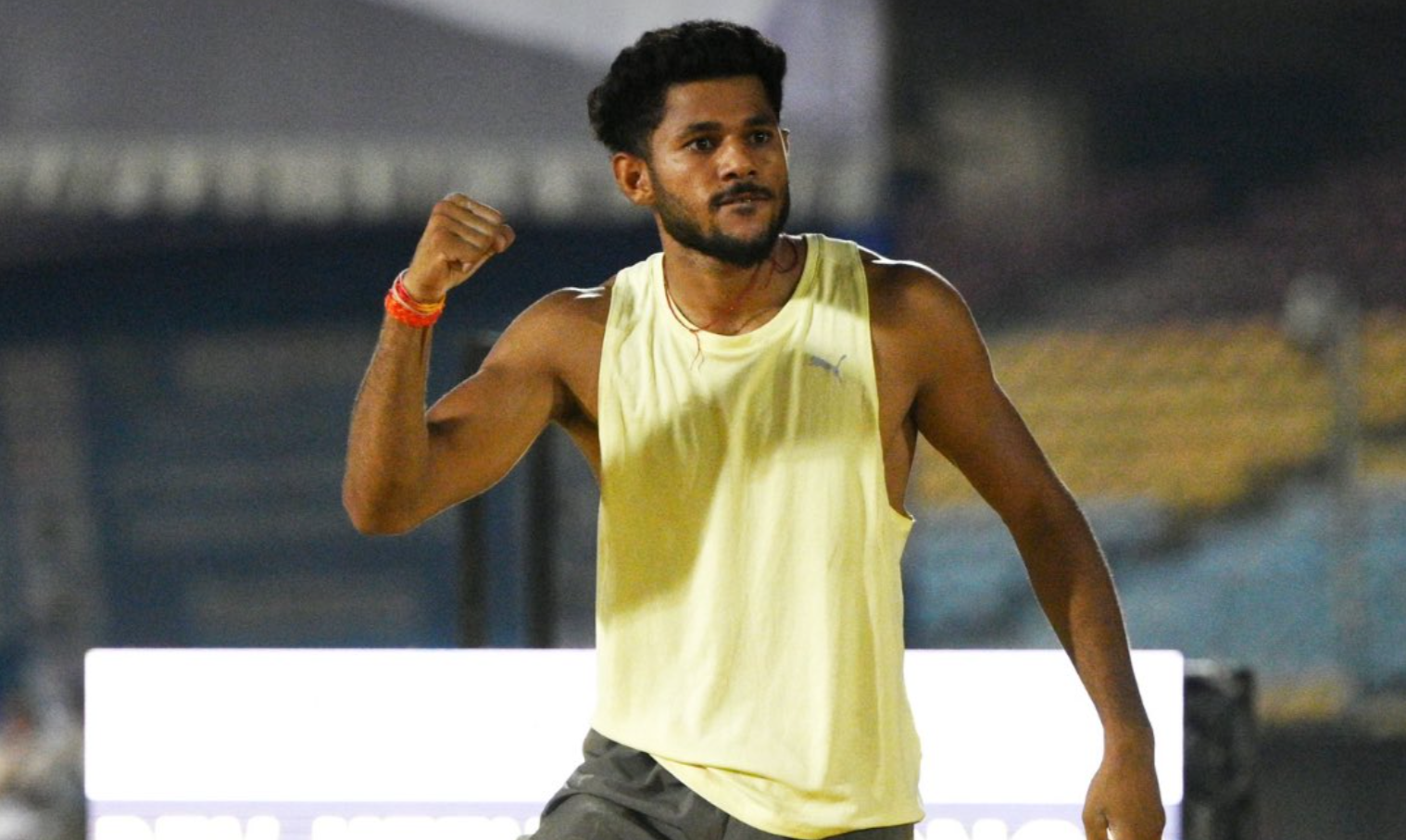
National record holder Tejas Shirse once again stamped his authority on Indian hurdling, clinching gold in the men’s 110m hurdles final at the Federation Cup 2026 in Ranchi with a meet-record timing of 13.50 seconds.
In what is quickly becoming one of the most exciting rivalries in Indian athletics, Tejas held off the rapidly improving Krishik M by just 0.02 seconds in a thrilling final at the Birsa Munda Stadium. Krishik finished second in 13.52s, while Mohammed Lazan secured bronze with a timing of 13.83s.
Although the final did not produce the ultra-fast times many had anticipated after recent performances, it still reinforced an important reality Indian sprint hurdling is entering one of its strongest phases in history. Tejas Shirse’s 13.50s was enough to break his own Federation Cup meet record of 13.61s, which he had set back in 2023. More importantly, it continued his remarkable return to top form after battling injury setbacks over the last couple of seasons.
Just days before the Federation Cup, Tejas had already made headlines at the Indian Athletics Series-6 by clocking 13.43s, missing his own national record by just 0.01 seconds. That performance immediately raised expectations heading into Ranchi.
And while he narrowly missed the Commonwealth Games qualification mark of 13.39s this time, the signs remain extremely encouraging. Tejas looked composed from the gun and maintained his rhythm well across the hurdles despite strong pressure from Krishik in the closing stages. His experience in major finals ultimately proved decisive.
The rise of Krishik M, however, has added a completely new dimension to Indian hurdling.
At the Indian Athletics Series earlier this month, Krishik had clocked a sensational 13.43s to become India’s second-fastest athlete ever in the 110m hurdles, matching Tejas stride for stride in the national conversation. In Ranchi, he once again showed that his emergence is no fluke.
His silver medal-winning effort of 13.52s kept him firmly in contention throughout the race and confirmed that India now has two hurdlers capable of consistently challenging elite timings. For Indian athletics, that depth is extremely significant.
For years, Indian hurdling depended heavily on isolated individual talents. But the rivalry between Tejas and Krishik is now beginning to elevate the event nationally, creating higher standards and more competitive races. Their battles are also pushing Indian sprint hurdling closer towards global relevance. At the Asian level, timings around 13.30s are often enough to challenge for medals. With Tejas already holding the national record and Krishik progressing rapidly, India suddenly looks far more competitive in the discipline than it did a few years ago.
The Federation Cup final further highlighted the growing professionalism in Indian sprint events this season.
Athletes are now consistently competing under pressure, chasing qualification standards, national records and international rankings. That intensity is producing better performances across the board.
Behind the top two, Mohammed Lazan’s bronze medal performance of 13.83s also reflected the improving depth in the event nationally. While Tejas and Krishik currently remain clearly ahead of the field, the emergence of more sub-14-second hurdlers is another positive sign for Indian athletics.
Meanwhile, the women’s 100m hurdles final also produced an interesting result, with Tamil Nadu’s K Nandhini emerging as a surprise champion. Nandhini clocked 13.24s to win gold and register a new personal best, improving significantly from her previous best of 13.45s. The result marked one of the biggest breakthroughs of her career and immediately placed her among India’s top hurdlers.
Odisha’s Pragyan Prasad finished second in 13.33s, while Anjali C secured bronze with 13.35s. Karnataka’s Shreeya Rajesh also clocked 13.35s but narrowly missed the podium on countback.
Although none of the athletes managed to approach the Commonwealth Games qualification standard, their performances still carried major significance. The Asian Games qualification mark stood at 13.34s, meaning Nandhini and Pragyan successfully achieved the required standard. Sabita Toppo, who finished fifth in 13.57s, also secured qualification for the Asian U23 Championships.
The women’s final reflected the increasing competitiveness in Indian sprint hurdles, where multiple athletes are now capable of running in the low 13-second range. For Tejas Shirse, though, Ranchi once again reinforced his position as India’s premier male hurdler.
Even after injury struggles and inconsistent phases, he continues to deliver when it matters most. His ability to repeatedly perform under pressure, defend titles and break records highlights both his quality and experience. At 13.50s, he may still feel there is unfinished business considering how close he recently came to the national record again. But with major international competitions ahead, including the Commonwealth Games and Asian Games cycle, his current form suggests another breakthrough performance could be imminent.
Most importantly, Indian hurdling now has competition at the top.
And that competition is only making the event stronger.
Comments (0)
to post comments, replies, and votes.
Loading comments…