
Federation Cup 2026: Seema Wins Tactical Women’s 5000m as Shivaji M Redeems Himself with Men’s Gold
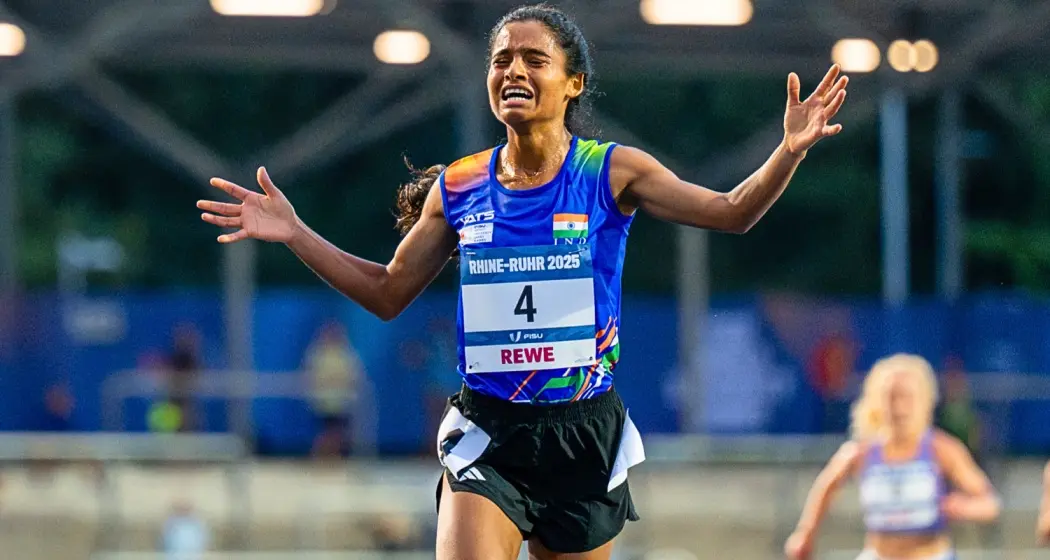
Day 4 of the Federation Cup 2026 saw two contrasting but equally significant distance-running stories unfold as Seema claimed the women’s 5000m title while Shivaji M produced a strong comeback performance to win gold in the men’s race.
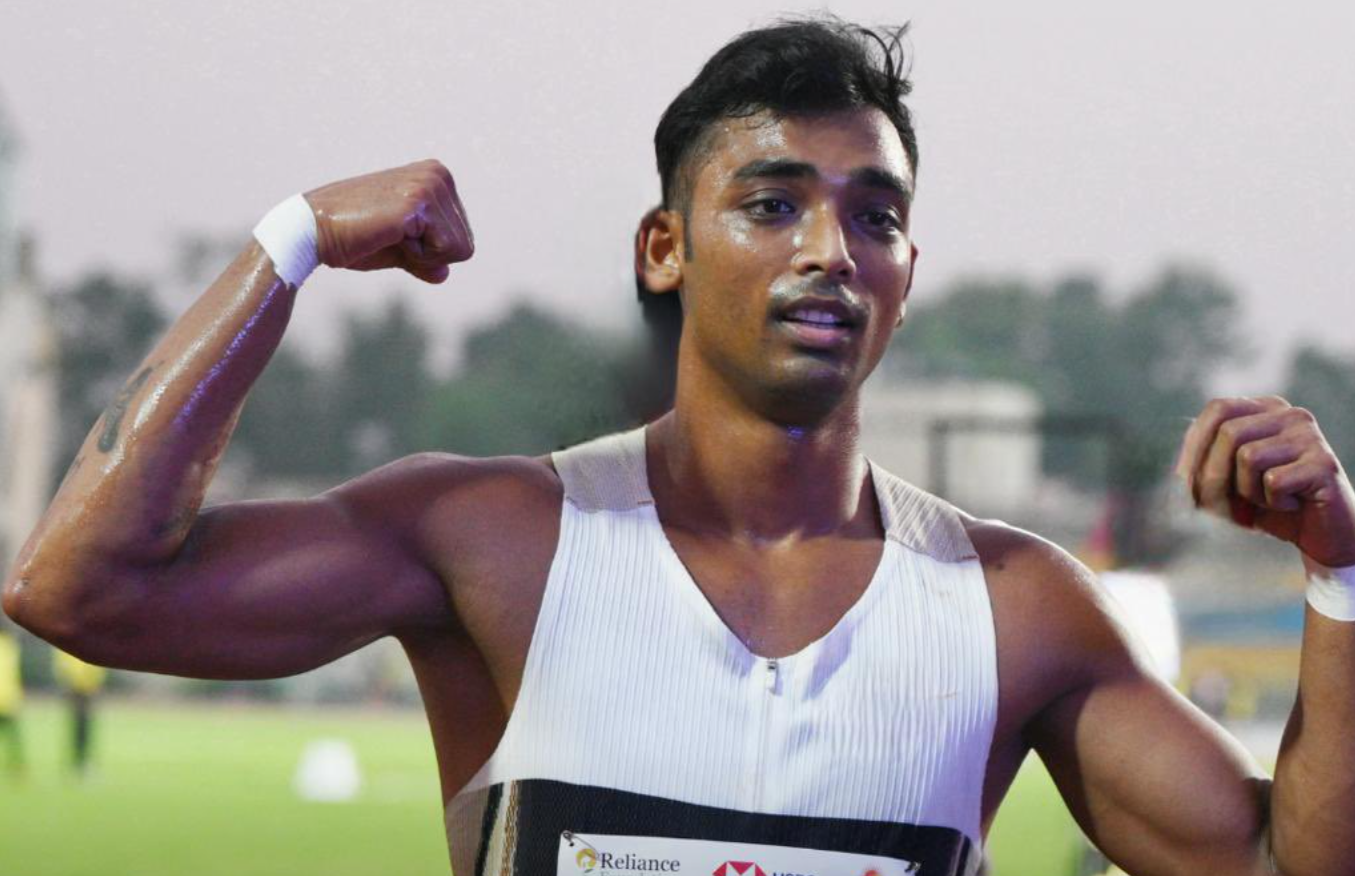
Although neither race produced particularly fast timings, both finals highlighted the tactical complexity of championship distance running and the growing depth in Indian middle and long-distance athletics. Representing Reliance, Seema clinched gold in the women’s 5000m with a timing of 16:04.83s.
On paper, the result may appear below her season’s best standards. Earlier this year, Seema had already established herself among India’s leading distance runners by clocking an impressive personal best of 15:16.20s, a mark significantly quicker than the winning time at the Federation Cup. However, the final in Kochi developed into a completely different kind of race.
Instead of a fast, pace-driven contest, the women’s 5000m became tactical from the early stages, with athletes reluctant to force the tempo under challenging weather conditions. The slow opening kilometres ensured the field remained compact deep into the race before the decisive moves arrived in the closing laps. After the race, Seema herself acknowledged that both the weather and lack of strong competition affected the overall pace of the event.
Championship racing often differs sharply from time-based meets. Athletes prioritise medals and positioning over pace, particularly when environmental conditions are difficult. In such scenarios, tactical awareness and finishing speed become far more important than pure endurance metrics. Seema handled those conditions effectively.
Despite the slower rhythm, she remained composed throughout the race before asserting control when it mattered most to secure the national title comfortably.
Ravina of Maharashtra secured the silver medal with a timing of 16:46.21s, while Sonam Parmar representing IOCL claimed bronze in 16:48.11s. The sizeable gap between Seema and the rest of the field underlined her superior strength and race management despite the slower conditions. For Indian women’s distance running, the bigger positive remains Seema’s consistency across different race formats. Earlier in the season, she had already shown she can compete at significantly faster pace levels, while the Federation Cup demonstrated her ability to adapt tactically under championship pressure.
That versatility becomes extremely important at international competitions where races often become unpredictable and heavily tactical.
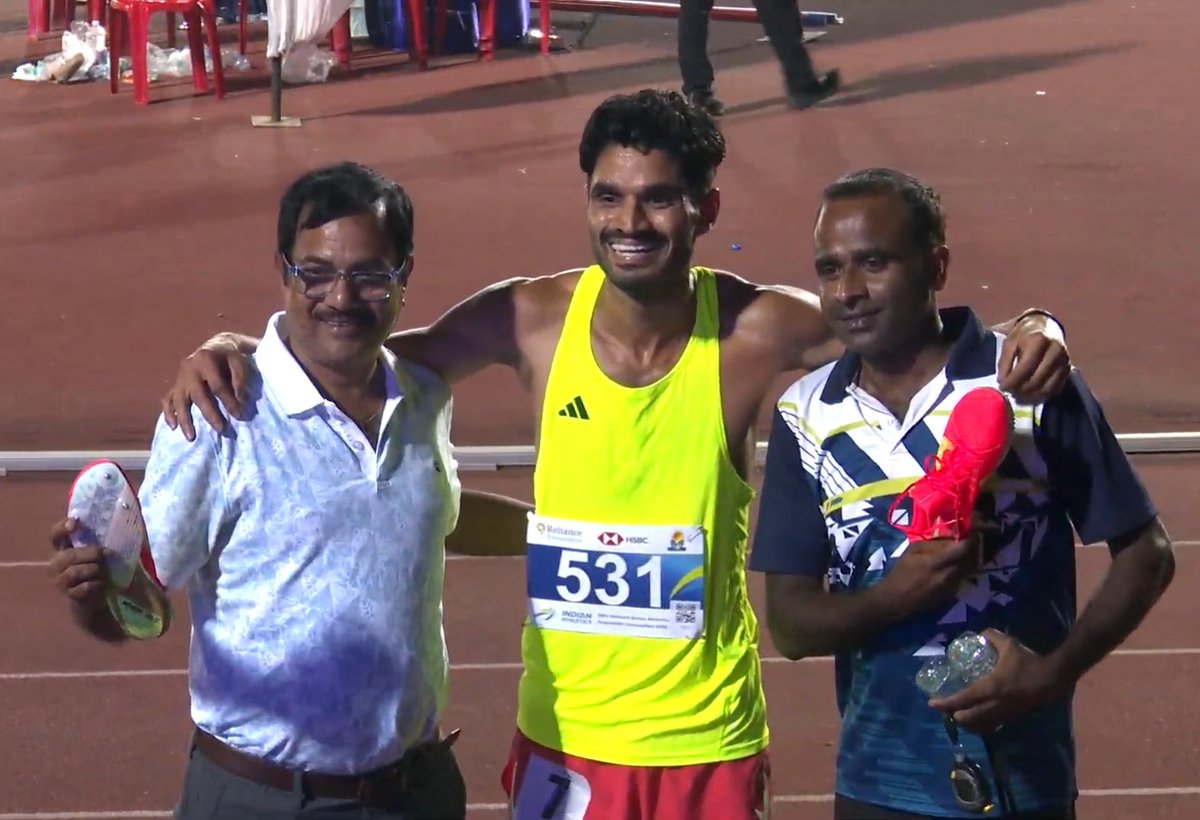
If Seema’s victory highlighted control and composure, the men’s 5000m final revolved around redemption. Shivaji M entered the race carrying the disappointment of losing the men’s 10,000m title earlier in the competition after being disqualified for lane infringement. For any distance runner, especially a young athlete, such a setback can become mentally draining during a championship. But Shivaji responded impressively.
The Maharashtra runner bounced back strongly to clinch gold in the men’s 5000m with a timing of 14:14.43s.
The race itself remained tightly contested throughout, with the leading group staying together until the closing stages. Shivaji ultimately separated himself through superior finishing strength and tactical positioning over the final laps.
Vinod Singh finished second in 14:15.50s, less than two seconds behind Shivaji, while Deepak Bhatt completed the podium in 14:17.18s. Unlike the women’s event, the men’s final produced a much more compressed field and a closely fought battle for medals. The narrow margins reflected the growing competitiveness in Indian men’s distance running domestically, particularly among younger athletes attempting to establish themselves internationally.
Although Shivaji secured gold, the Commonwealth Games qualification mark of 13:19.64s remained well beyond reach. That standard highlights the significant gap Indian distance runners still need to bridge to consistently compete at elite global levels. However, Shivaji’s performance still carried important value because he successfully breached the qualification standard for the U23 Asian Athletics Championships.
At just 22 years of age, that achievement represents an encouraging sign for India’s long-term distance-running pipeline.
One notable aspect of both 5000m finals was how tactical they became. Indian distance races have increasingly shifted away from purely pace-driven contests toward more strategic championship-style racing. That evolution is important because international championship finals rarely unfold at even pace.
Athletes must learn positioning, pace judgment, surging and race management under pressure skills that cannot always be developed through fast time trials alone.
Both Seema and Shivaji demonstrated those qualities effectively during the Federation Cup.
While the timings may not have produced headlines internationally, the performances still offered positive indicators for Indian athletics. Seema continues to establish herself among India’s most reliable women’s distance runners, combining strong personal bests with tactical maturity. Shivaji, meanwhile, showed resilience and mental strength by recovering immediately after a painful disqualification setback.
For Indian distance running, those qualities may ultimately prove just as valuable as the times themselves.
Comments (0)
to post comments, replies, and votes.
Loading comments…