
Baton Chaos Derails India’s World Athletics Relays Campaign in Gaborone
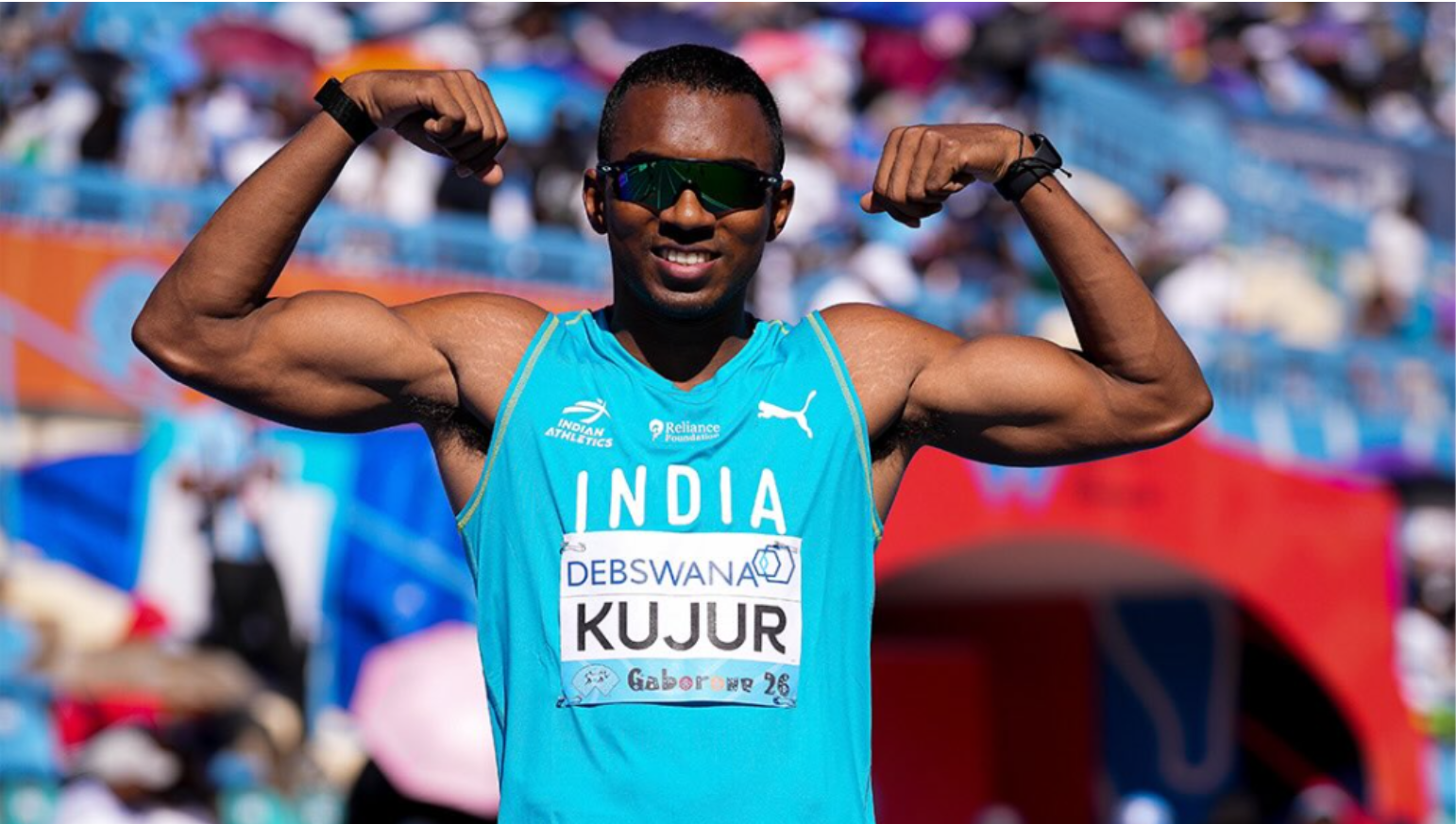
India arrived at the World Athletics Relays 2026 in Gaborone hoping to secure qualification for the 2027 World Championships and continue building momentum toward the 2026 Asian Games.
Instead, the two-day campaign became a painful reminder that relay success depends on far more than just speed. Across multiple events, baton drops, exchange-zone errors and technical mistakes completely unraveled India’s challenge on the global stage. While there were flashes of promise, particularly in terms of raw sprinting ability, the repeated relay errors ultimately overshadowed the positives and exposed recurring weaknesses in India’s sprint relay structure.
The most frustrating aspect for Indian athletics was that many of the teams were actually competitive in terms of pace.
The men’s 4x100m relay squad, for example, had entered the championships aiming to push close to the national record of 38.69 seconds. The quartet of Harsh Raut, Animesh Kujur, Ragul Kumar and Gurindervir Singh had shown encouraging progress individually in recent months and was viewed as one of the country’s fastest sprint combinations in years.
However, technical execution once again proved disastrous.
On Day 2, the Indian men’s sprint relay team dropped the baton during the final exchange between Ragul and Gurindervir, ending any hopes of a competitive finish. Even more concerning was the subsequent disqualification under TR 24.7 for passing the baton outside the takeover zone. That disqualification was not an isolated incident.
In fact, this marked the third time in the last two years that India’s men’s 4x100m relay team had been disqualified for the exact same violation. Similar errors had already occurred at the 2025 Asian Athletics Championships and the 2026 Invitational Relay ( Manikanta got injured ) event.
At the elite level, such repeated mistakes point toward a deeper structural issue rather than isolated bad luck. Relay sprinting is built around rhythm, chemistry and thousands of repetitions in training. Nations that consistently succeed in sprint relays treat baton exchange precision as seriously as raw speed itself. India’s repeated exchange-zone errors suggest that technical relay preparation still remains behind the world standard.
The women’s 4x100m relay team also endured a disappointing outing.
India’s quartet suffered a baton drop during the very first exchange between Tamanna and Nithya Gandhe. Although Nithya managed to recover the baton and continue the race, the momentum was completely lost and the team eventually finished last with a timing of 53.90 seconds. It was particularly unfortunate because the women’s team had entered the championships with realistic hopes of achieving the Commonwealth Games qualifying standard of 43.86 seconds after clocking 43.97 on Day 1.
Instead of building on that promising performance, another baton mishap ended their campaign on a frustrating note. In total, India suffered three major baton-related incidents across the championships a statistic that became symbolic of the country’s overall campaign in Botswana. Ironically, the one sprint relay team that executed its exchanges relatively cleanly delivered one of India’s best performances of the competition.
The mixed 4x100m relay quartet of Ragul Kumar, Nithya Gandhe, Animesh Kujur and SS Sneha clocked a new national record of 41.35 seconds while finishing sixth in their heat. The performance showed what India’s sprint relays are capable of when exchanges are controlled and technically sound. The team improved the national record by nearly a second and demonstrated encouraging chemistry in an event that is still relatively new globally.
Animesh Kujur’s powerful third leg especially stood out, highlighting the individual sprinting talent India now possesses. But while the mixed relay provided a positive moment, the broader picture remained worrying. India’s World Relays campaign increasingly became a story of opportunities lost through avoidable technical errors.
Even outside the sprint relays, relay execution issues continued to haunt the team. The men’s 4x400m relay India’s strongest qualification hope failed to finish after Amoj Jacob suffered a cramp during the second leg. The team had looked competitive early in the race and was considered capable of qualifying for the 2027 World Championships with a sub-3-minute performance.
Instead, the race ended in heartbreak. The contrast between India’s athletic potential and its inability to consistently execute under pressure was impossible to ignore throughout the championships.
The frustrating part is that Indian athletics is no longer lacking talent. Sprinters like Animesh Kujur, Rajesh Ramesh, Vishal TK and Amoj Jacob have demonstrated internationally competitive pace. The men’s 4x400m squad has repeatedly shown the ability to run around the 3-minute mark, while the sprint relay teams are gradually improving in raw speed.
But global relay competitions are unforgiving. A fractionally mistimed exchange, a baton outside the takeover zone or a small lapse in coordination can destroy months of preparation within seconds. That is precisely what happened to India repeatedly in Gaborone. The championships should now serve as a wake-up call. India’s relay squads clearly need far more dedicated technical camps focused specifically on baton exchanges, race rhythm and pressure execution. Relay success at the highest level is not built purely through individual sprint times it comes from collective synchronization.
There were still positives to take away from the World Relays. The mixed 4x100m national record showed progress, and several Indian athletes gained valuable experience competing against the world’s best relay nations.
But ultimately, India will leave Gaborone feeling that qualification opportunities slipped away not because of a lack of talent, but because of technical errors that continue to repeat themselves at the biggest stage.
Comments (0)
to post comments, replies, and votes.
Loading comments…