Asian Games 2026: India Finalises Shotgun Squad with Focus on Depth and Structure

India has finalised its proposed shotgun shooting squad for the Asian Games 2026, with a balanced mix of experience and emerging talent across trap and skeet disciplines.
The selection reflects a clear emphasis on domestic performance benchmarks and structured selection pathways as the country builds towards one of its most important continental assignments.
With the Asian Games scheduled in Aichi–Nagoya from September 19 to October 4, the focus now shifts to how this group can convert consistency into medals in a discipline where margins are often minimal.
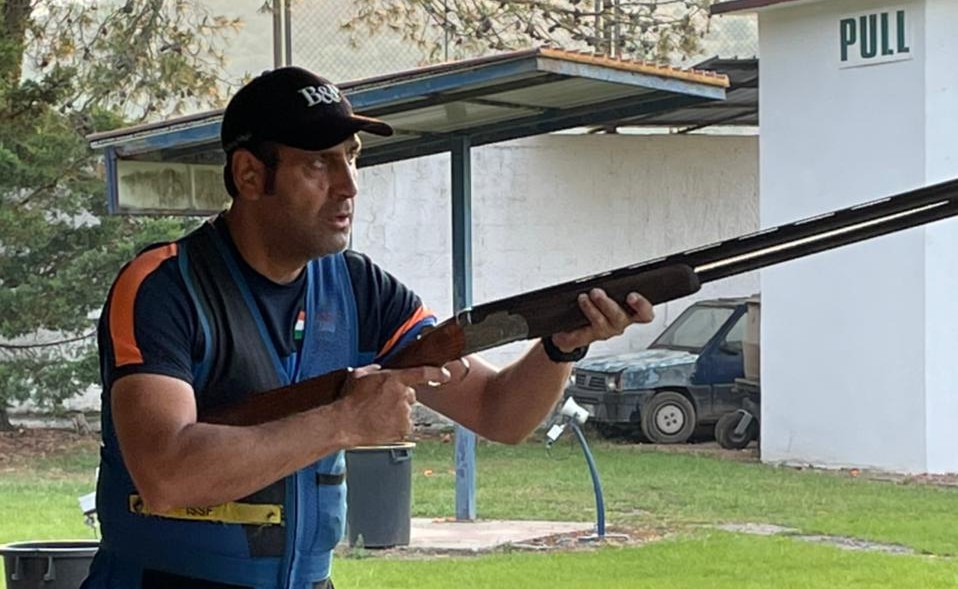
India’s men’s trap team will feature Kynan Chenai, Ahvar Rizvi and Shapath Bhardwaj three shooters who bring a combination of international exposure and recent domestic form. Kynan Chenai remains one of the most experienced names in Indian trap shooting. His ability to deliver under pressure, combined with consistent international appearances, makes him a key figure in the squad.
Ahvar Rizvi and Shapath Bhardwaj represent the next layer of India’s trap shooting depth. Both shooters have shown the ability to compete at a high level, particularly in domestic trials and selection events, which have played a decisive role in shaping the final squad. The composition of the team indicates a strategy built around reliability and recent form, with the expectation that the trio can deliver consistent qualifying scores and push for finals.
In the women’s trap category, Neeru, Manisha Keer and Aashima Ahlawat have been selected to represent India. This group reflects India’s growing depth in women’s shotgun shooting. Manisha Keer, in particular, has been a consistent performer in domestic competitions, while Aashima Ahlawat has shown steady progression over recent seasons.
Neeru’s inclusion adds balance to the team, with the trio expected to compete strongly both individually and in team events. Women’s trap has become increasingly competitive at the Asian level, making consistency in qualification rounds crucial. India’s selections suggest a focus on athletes who can maintain stable scoring patterns.
India’s men’s skeet team will be led by Anantjeet Singh Naruka, alongside Bhavtegh Gill and veteran shooter Mairaj Khan. Naruka has emerged as one of India’s most reliable skeet shooters, consistently performing on the international stage. His inclusion as a lead shooter highlights India’s reliance on athletes with proven track records in high-pressure environments.
Bhavtegh Gill adds youthful energy and competitive potential, while Mairaj Khan’s experience provides stability and tactical awareness qualities that are critical in a discipline where rhythm and mental composure are key.
This blend of youth and experience positions India as a competitive unit in skeet events.
The women’s skeet team comprises Parinaaz Dhaliwal, Raiza Dhillon and Maheshwari Chauhan. Raiza Dhillon, one of India’s most promising young shooters, continues to be a central figure in the squad. Her performances at junior and senior levels have established her as a strong contender in international competitions. Parinaaz Dhaliwal and Maheshwari Chauhan add depth to the team, ensuring that India fields a well-rounded unit capable of competing across qualification and finals.
Women’s skeet has seen rapid evolution globally, and India’s squad reflects an attempt to keep pace with that progression.
India has also finalised its combinations for mixed team events, which have become an important medal opportunity in recent years.
Trap Mixed Team: Kynan Chenai & Neeru
Skeet Mixed Team: Anantjeet Naruka & Parinaaz Dhaliwal
These pairings are built around complementing strengths—combining experienced shooters with consistent performers to maximise scoring potential. Mixed events often demand not just individual excellence but also coordination and composure under shared pressure, making these combinations strategically significant.
The selection of the shotgun squad has been firmly rooted in domestic trials and predefined criteria.This approach reflects a broader shift within Indian shooting towards a more structured and transparent selection system. By prioritising performances in national competitions, the focus remains on current form rather than reputation. Such systems are designed to create a level playing field, ensuring that athletes are selected based on measurable output and consistency.
India enters the Asian Games with realistic medal ambitions in shotgun events. While the competition from countries like China, South Korea and Kuwait remains strong, India’s depth across both trap and skeet provides multiple avenues for podium finishes.
The key challenge will be translating qualification consistency into finals performance a stage where pressure, precision, and decision-making often determine outcomes.
With the squad now largely finalised, the focus will shift to preparation. Training camps, international exposure, and match simulations will play a crucial role in fine-tuning performance. For shooters, maintaining rhythm and mental sharpness will be as important as technical execution.
India’s shotgun squad for the Asian Games 2026 reflects a clear strategy—backing current form, maintaining depth, and building combinations for both individual and team events. As the countdown to the Games begins, the emphasis will be on execution.
In a sport defined by fine margins, preparation and consistency will ultimately determine whether this squad can convert potential into medals on the continental stage.
Comments (0)
to post comments, replies, and votes.
Loading comments…