Why Everbrightson Sana Deserves India Call-Up
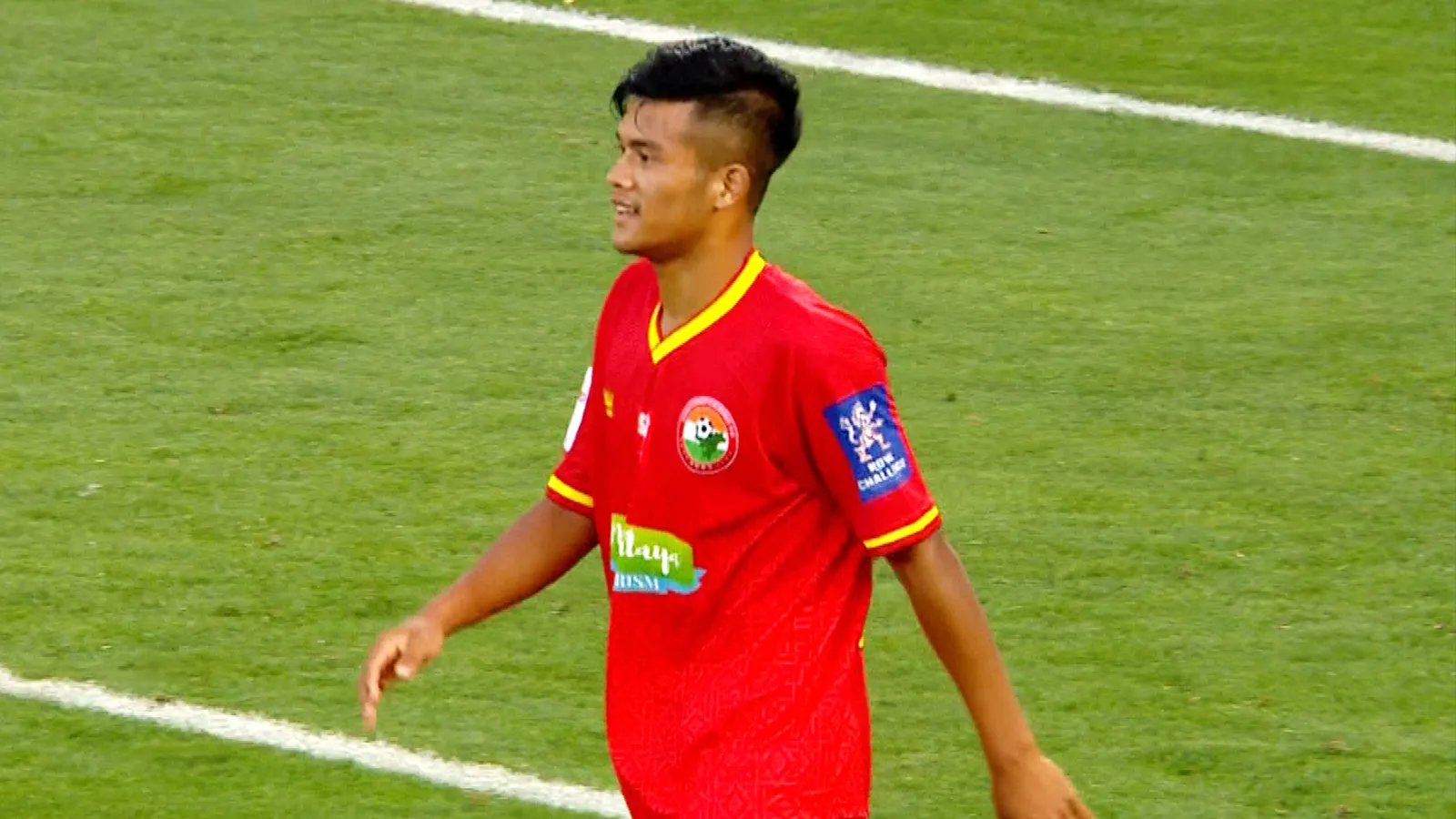
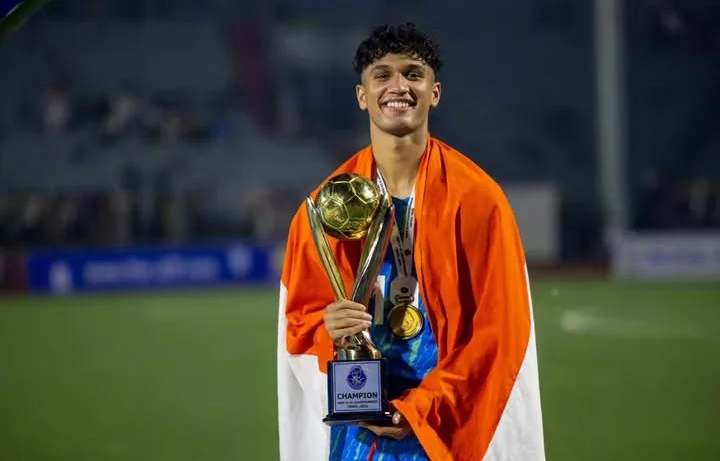
Few Indian forwards outside the ISL have produced numbers as impressive as Everbrightson Sana Mylliempdah this season.
The Shillong Lajong FC attacker has quietly emerged as one of the most productive Indian forwards in domestic football during the 2025-26 campaign, registering in 18 matches 10 goals & 3 assists across all competitions so far.
That return immediately places him among the best-performing domestic attackers outside the Indian Super League ecosystem. Naturally, fans have started demanding a national-team opportunity. And from a purely footballing perspective, the argument is completely valid. The complication, however, is that many supporters asking for an India U23 call-up may not realise one important detail: Sana is no longer eligible for standard U23 competition.
The biggest issue surrounding Everbrightson Sana’s international pathway is administrative rather than tactical. The striker was born on December 28, 2002.
For the current AFC U23 Asian Cup and 2026 Asian Games cycle, players must be born on or after January 1, 2003. That means Sana misses the eligibility cutoff by just four days.
Four days.
It is one of the harshest realities of age-based football tournaments. A player can perform brilliantly domestically but still become unavailable purely because of calendar restrictions. So while fans continue hoping for a June U23 camp inclusion under Naushad Moosa, a standard U23 selection is technically impossible. In fact, it should shift the conversation toward something bigger. Instead of debating whether Sana deserves a U23 opportunity, Indian football should seriously ask:
Why is he not entering the senior national team discussion?
Because based on domestic production, tactical profile and current form, there is absolutely a case for monitoring him within the senior pool. Sana’s statistical output this season deserves attention. Across the Durand Cup and Indian Football League campaign, he has produced 13 direct goal contributions in 18 matches which means a goal contribution every 0.72 matches & a goal every 145 minutes
Those are extremely respectable numbers for a domestic Indian forward. More importantly, the goals have not come in meaningless situations. His biggest visibility spike came during the 2025 Durand Cup. Shillong Lajong reached the semifinals and Sana played a massive role in that run, scoring 4 goals & 1 assist in just five appearances.
One of the standout moments came against Indian Navy, where he scored the decisive late penalty in the quarterfinal. That tournament showcased exactly what makes Sana such an interesting forward.
Tactically, Sana is not a traditional static striker. Under Shillong Lajong coach Birendra Thapa, he operates within a fluid 4-3-3 system that demands constant pressing, defensive intensity, rotational movement & quick transitions Sana thrives in that setup. He presses aggressively from the front, constantly harries opposition defenders and works tirelessly without possession. That profile is increasingly important in modern football. Sana fits several of those tactical requirements naturally.
Another important aspect of his game is positional fluidity. Rather than staying centrally between centre-backs, Sana often drifts into wide channels, drops into half-spaces, links with wingers & also creates lanes for midfield runners That movement creates problems for defensive structures. It also explains why Shillong Lajong’s attack has looked far more dynamic with him leading the line.
Indian football’s long-term striker issue remains unresolved.
Beyond Sunil Chhetri’s era, India still struggle to consistently produce reliable domestic finishers, physically aggressive pressing forwards & complete modern centre-forwards Several younger names remain promising, including Suhail Ahmad Bhat, Parthib Gogoi, Irfan Yadwad & Gurkirat Singh But Sana’s production this season compares very favourably with many players already around the national-team ecosystem.
That alone should earn him stronger scouting attention.
Interestingly, there may still be one realistic pathway into India’s broader setup. The 2026 Asian Games squad allows teams to include up to three overage players alongside U23 footballers. That changes the equation entirely. Sana’s rise also reinforces an important trend. Shillong Lajong FC continue proving themselves as one of India’s best developmental clubs. The Northeast remains one of India’s strongest footballing ecosystems. And Sana’s emergence is another example of that production pipeline working effectively.
Ultimately, the debate around Everbrightson Sana should not become limited to whether he fits an age bracket. The more important reality is this: One of India’s most productive domestic forwards currently sits outside the mainstream national conversation despite delivering consistently throughout the season. Yes, U23 eligibility rules prevent a conventional youth-team call-up. But that should not prevent India’s senior coaching staff from paying attention.
Because players who score goals consistently, press aggressively, work tactically and influence important matches always deserve serious consideration.
And this season, Everbrightson Sana has done exactly that.
Comments (0)
to post comments, replies, and votes.
Loading comments…
.jpg)


.jpg)