
India’s Uber Cup Campaign Ends in Group Stage Exit as Doubles Concerns Resurface
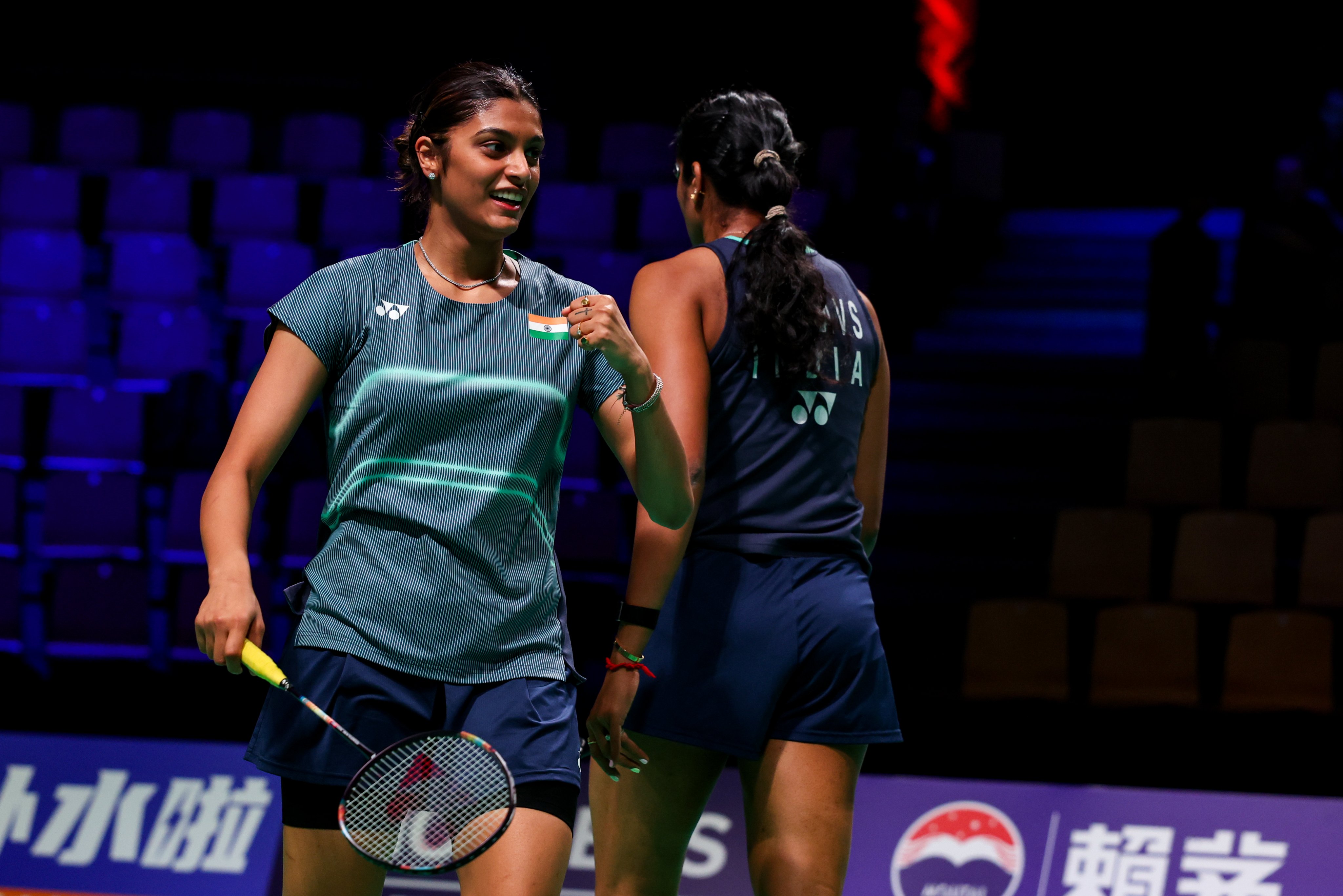
India Women's Badminton Team endured a disappointing campaign at the BWF Uber Cup 2026, crashing out in the group stage for the first time since 2018.
Placed in a difficult group alongside powerhouse China, hosts Denmark, and Ukraine, the eighth-seeded Indian side failed to secure a knockout berth after losses to Denmark and defending champions China. India’s only victory in the group came against Ukraine, but by then the campaign had already slipped out of their control. The tournament began on an uncertain note against host nation Denmark in what was always expected to be a crucial tie. Leading the charge once again was PV Sindhu, who delivered the perfect start for India with a composed victory over Line Christophersen in the opening singles.
However, the momentum quickly shifted. Young Indian shuttler Unnati Hooda fought hard against the experienced Line Kjaersfeldt but narrowly lost 12-21, 23-25 in a tightly contested encounter. The defeat levelled the tie and placed additional pressure on India’s doubles combinations. That pressure became evident in the first doubles match.
India’s world No. 48 pair of Priya Konjengbam and Shruti Mishra looked on course for victory after earning two match points against Denmark’s scratch pairing of Kudsk and Werge. But the Danish duo mounted a remarkable comeback to win 21-17, 11-21, 23-21 and hand the hosts a critical lead. In the fourth match, 17-year-old Tanvi Sharma faced the difficult task of overcoming Amalie Schulz in front of a vocal home crowd. Despite flashes of promise, the teenager could not turn the tie around as Denmark sealed victory.
India’s only consolation came in the final doubles rubber, where Sindhu partnered Tanisha Crasto and benefited from the retirement of Christine Busch midway through the contest. That defeat meant India entered the remaining two ties with no margin for error. As expected, the Indian side comfortably defeated Ukraine 4-1. Unnati Hooda, Tanvi Sharma, Devika Sihag and the Sindhu-Tanisha combination all secured convincing wins, while Selvam and Singhi accounted for the lone defeat.
The result kept India’s qualification hopes alive heading into the decisive clash against China. Facing the defending champions in a do-or-die encounter, India needed something extraordinary. For a brief period, it appeared possible. Sindhu produced one of her best performances in recent months against world No. 2 Wang Zhi Yi. The Indian star looked set for a major upset after taking an 18-12 lead in the deciding game. But Wang showed immense composure under pressure, fighting back to steal the match 21-19 in the decider.
That loss proved a massive turning point in the tie. India’s doubles struggles resurfaced immediately afterward as Priya and Shruti were comprehensively beaten 11-21, 8-21 by world No. 1 Chinese pair Liu and Tan. The gap in quality and consistency between India’s doubles combinations and the world’s elite once again became painfully clear. Youngster Isharani Baruah attempted to challenge former Olympic champion Chen Yu Fei and showed glimpses of her potential, especially in the opening game. But the Chinese star controlled the key moments to win 22-20, 21-13 and secure the tie for China.
India did manage to push China in the second doubles rubber.
Tanisha Crasto and Selvam produced a surprisingly competitive display against Luo and Zhang, stretching the match to three games before eventually losing 10-21, 21-12, 19-21. Devika Sihag then went down to Xu Wen in the final singles match as China completed a dominant 5-0 result. The campaign once again exposed India’s continuing doubles concerns in team badminton.
https://thegodofsports.com/victor-drivex-9x-badminton-racket/
Use Coupon Code ISH To Get Additional 7% Off on CheckOut
Team events such as the Uber Cup demand reliable depth in doubles, and India struggled significantly in that department. In the absence of the established pairing of Treesa Jolly and Gayatri Gopichand Pullela, the overall level of India’s doubles combinations appeared inconsistent and vulnerable under pressure.
The fact that Sindhu primarily a singles specialist had to step into doubles highlighted the shortage of dependable top-level doubles depth within the squad. Critics and fans alike pointed toward this issue as one of the key reasons behind India’s early exit. While India has consistently produced world-class singles players over the past decade, the country’s progress in doubles remains limited compared to major badminton nations like China, Japan and Korea.
Still, despite the disappointing result, there were positives to take away. Sindhu’s movement and physical sharpness looked significantly improved compared to recent tournaments. Although she narrowly lost to Wang Zhi Yi, her performance suggested that the two-time Olympic medallist may finally be rediscovering her rhythm at the highest level. The Sindhu-Tanisha partnership also emerged as one of the more intriguing storylines of the tournament. The pair remained unbeaten together during the campaign, sparking discussions among fans about whether Sindhu could potentially explore doubles more seriously later in her career. Most importantly, youngsters like Tanvi Sharma, Unnati Hooda and Devika Sihag gained invaluable experience competing against elite international opposition in a high-pressure team environment.
That exposure could prove crucial for the future because while India’s Uber Cup campaign ended in disappointment, the rebuilding process for the next generation is clearly already underway.
Comments (0)
to post comments, replies, and votes.
Loading comments…