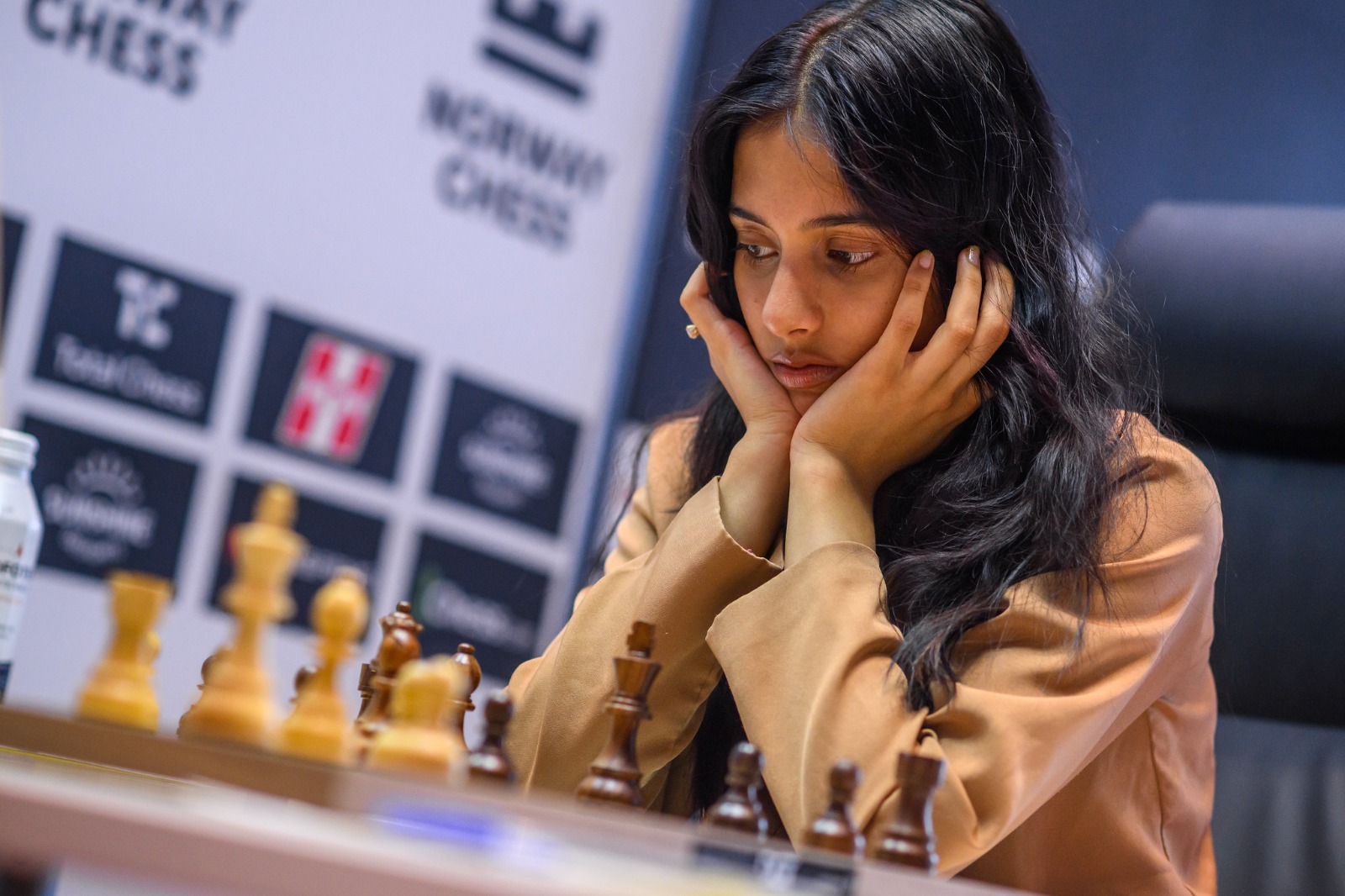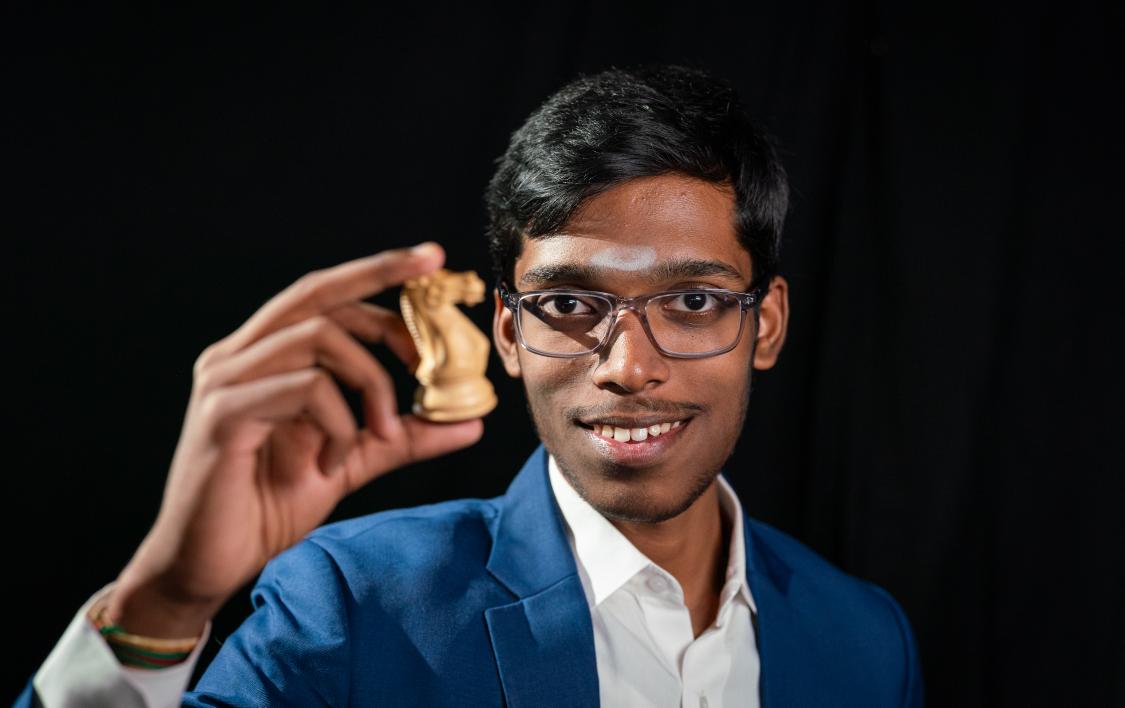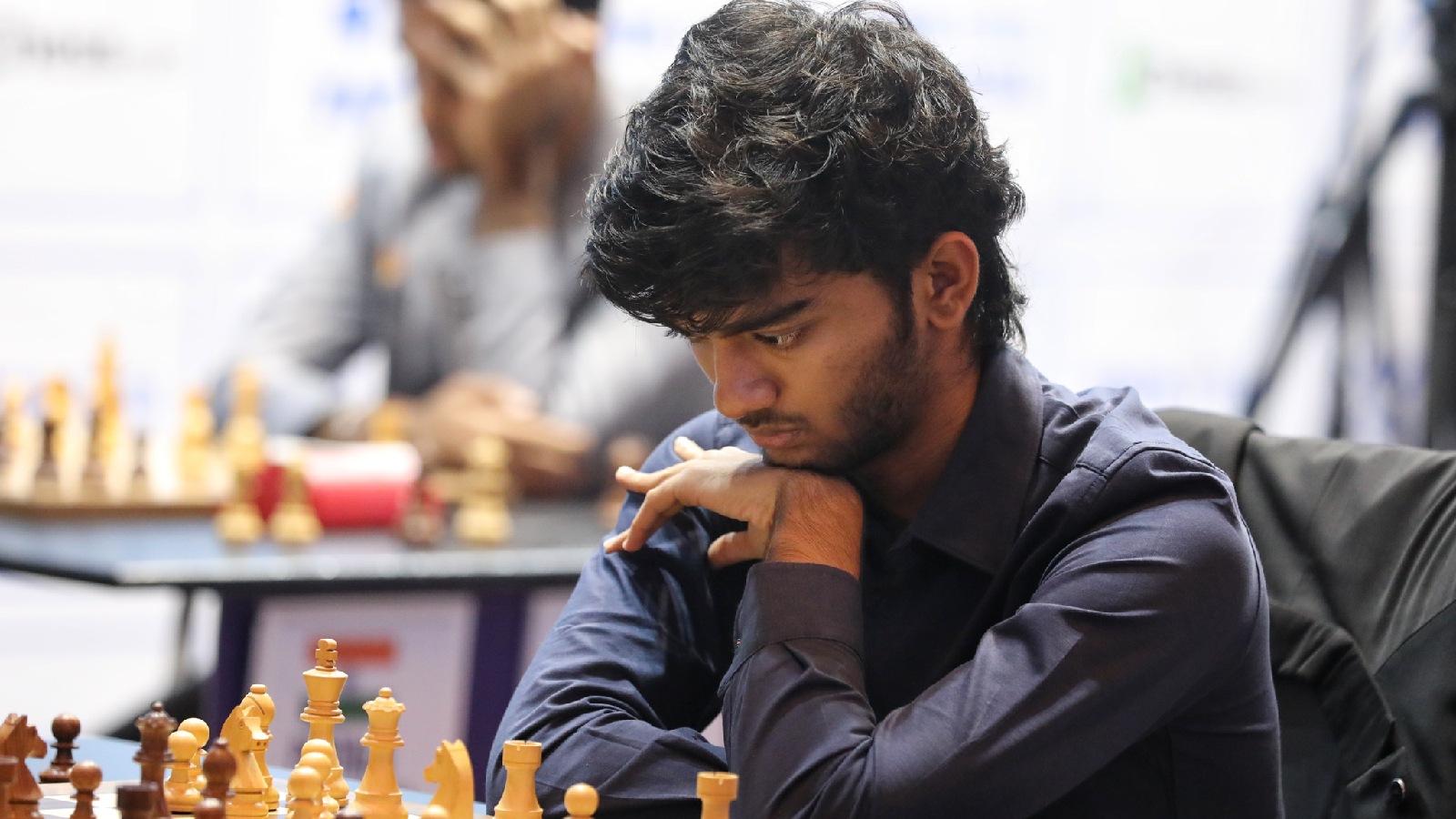

Gukesh Sends Early Statement by Defeating Sindarov at Grand Chess Tour Poland

World Champion D. Gukesh delivered a timely and significant victory at the Grand Chess Tour: Super Rapid & Blitz Poland 2026
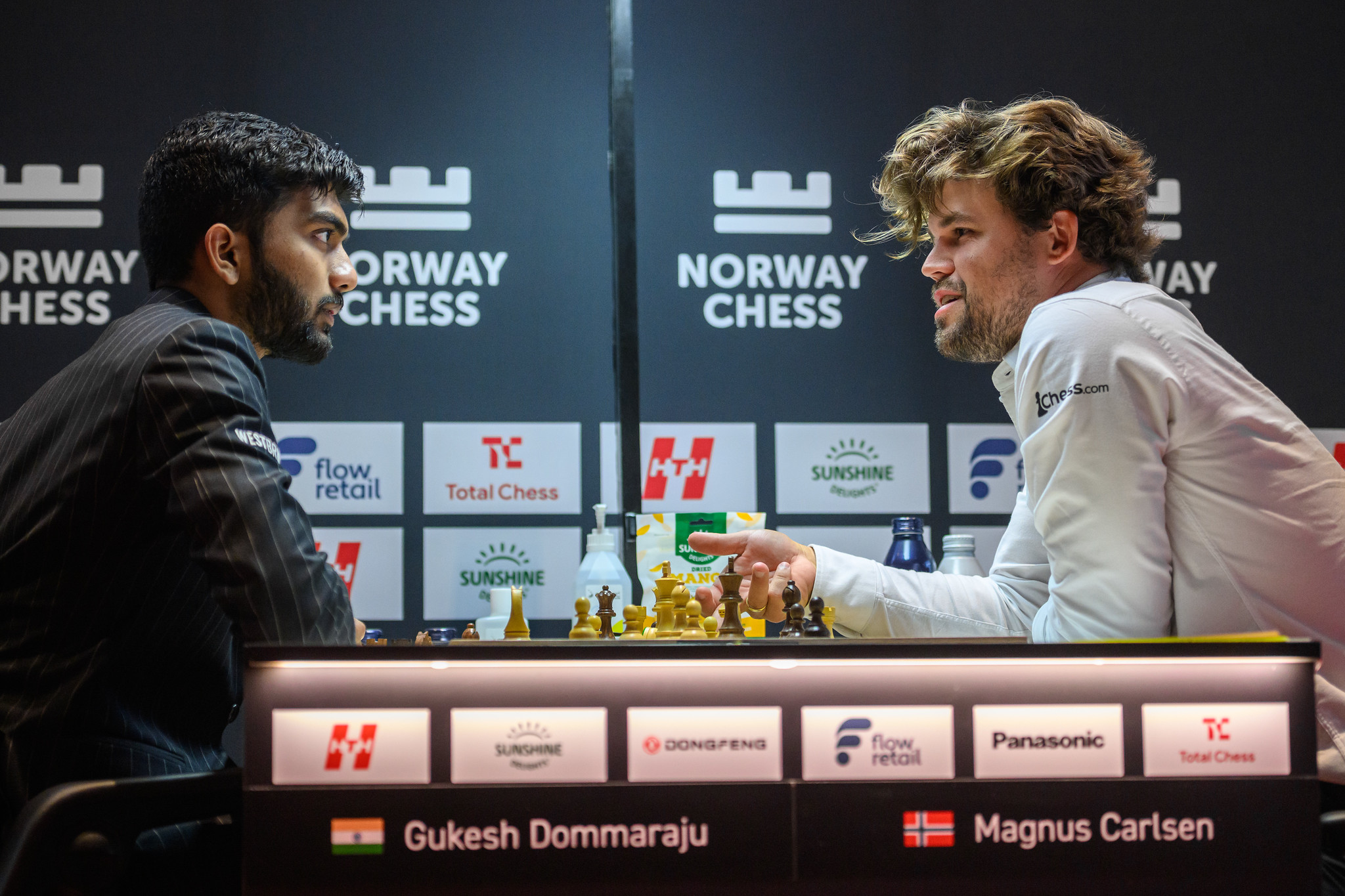
World Champion D. Gukesh delivered a timely and significant victory at the Grand Chess Tour: Super Rapid & Blitz Poland 2026, defeating his upcoming World Championship challenger Javokhir Sindarov in a tightly contested rapid game in Warsaw.
Beyond the result itself, the win carried psychological weight, offering Gukesh a crucial boost at a time when questions around his form had begun to surface. Playing with the black pieces, Gukesh showcased composure and technical precision to outplay the Uzbek Grandmaster in 52 moves. The game ultimately turned in a complex rook-and-minor-piece endgame, where Gukesh neutralised Sindarov’s dangerous passed h-pawn and converted his material and positional advantage with clarity.
The game began with Sindarov opting for 1.e4, to which Gukesh responded with the Caro-Kann setup through 1c6. The opening quickly transitioned into a balanced structure, with both players developing steadily and avoiding early risks. Through the early middlegame, the position remained roughly equal. Sindarov attempted to generate imbalances with active pawn play and central pressure, while Gukesh focused on maintaining structural integrity and piece coordination. The exchanges that followed reduced the complexity of the position but set the stage for a nuanced endgame battle.
For a large portion of the game, the contest appeared to be heading toward a draw. However, a critical lapse from Sindarov reportedly involving a miscalculation that cost him a piece shifted the balance decisively in Gukesh’s favour. From that point onward, the Indian Grandmaster demonstrated strong conversion skills. Even with a material advantage, the position required precise handling, particularly given Sindarov’s active pieces and counterplay chances. The engines began to favour Gukesh significantly after move 35, but the practical task of converting the position remained non-trivial.
The final phase of the game highlighted Gukesh’s growing maturity in endgame scenarios. Sindarov attempted to create complications by advancing his h-pawn aggressively, pushing it all the way to the seventh rank. With his rook also becoming active, the Uzbek Grandmaster posed real practical problems. However, Gukesh’s defensive setup held firm. His rook activity and knight placement proved decisive, particularly in controlling key promotion squares. The critical moment came when Gukesh’s knight manoeuvred into position to halt the pawn’s advance, effectively neutralising Sindarov’s primary counterplay.
The final sequence saw Gukesh consolidate his advantage while simultaneously creating threats on the queenside. With no viable path to promotion and facing a worsening material deficit, Sindarov resigned after 52 moves. While the victory came in the rapid format rather than classical chess, its significance extends beyond the immediate standings. This was the first meeting between Gukesh and Sindarov since the latter emerged as the challenger for the next World Championship cycle.
In that context, the result serves as an early psychological marker. Chess at the elite level is as much about mental positioning as it is about preparation and calculation. By defeating his future opponent, Gukesh not only gained points on the board but also sent a subtle message ahead of their eventual title clash.
Observers also noted Gukesh’s rare display of emotion following the win. Known for his composed demeanour, the Indian briefly celebrated with a fist pump a reflection of both the importance of the result and the pressure he had been carrying.
Despite the high-profile win, Gukesh’s overall campaign in the rapid section has been mixed. He began the event with a draw against Alireza Firouzja before suffering a loss to Hans Niemann. Following the victory over Sindarov, he added another draw against Wesley So. After six rounds, Gukesh sits in fifth place with six points, indicating a competitive but inconsistent start. The rapid and blitz format, known for its unpredictability, often produces fluctuating results, and maintaining momentum will be key as the tournament progresses.
The timing of this win is particularly relevant. As the reigning World Champion, Gukesh has faced heightened scrutiny over his performances in the months following his title triumph. With the next World Championship cycle approaching, every game against top-level opposition carries added significance. Beating Sindarov in this setting offers reassurance both to Gukesh and his supporters that his core strengths remain intact. His ability to navigate complex positions, absorb pressure, and convert advantages was on full display in this encounter. As the Grand Chess Tour event continues, Gukesh will aim to build consistency and climb the standings. The rapid section will soon give way to blitz games, where quick decision-making and tactical sharpness become even more critical.
For now, however, the win over Sindarov stands out as a defining moment in his campaign not just for the result, but for what it represents. In elite chess, narrative and momentum often run parallel to performance. On this occasion, Gukesh has taken an important step in shaping both.
Comments (0)
to post comments, replies, and votes.
Loading comments…